


In This Article
Understanding PMOS and Hormonal Health
Why Fibre Matters in PMOS Nutrition
How Fiber for PMOS Supports Hormonal Balance
Best Fiber-Rich Foods for PMOS
Simple Ways to Increase Fibre Intake
Making PMOS Nutrition Easier with The Cinnamon Kitchen
While everyone thinks about reducing sugar consumption, working out more, or using various supplements when it comes to PMOS management, one substance is often overlooked. It might not seem like a fashionable trend in the world of healthy lifestyles on Instagram, but it still plays an extremely significant role in many processes relevant to women with PMOS. From regulating sugar levels to promoting a healthy gut, increasing satiety or maintaining hormonal balance, fibre can do wonders if you regularly consume it in your diet.
The even better news is that to increase your fibre intake, you don't need to change much in your life. It can be as easy as replacing refined food products with whole grain products, consuming more vegetables, or eating healthy snacks that are rich in fibre.
In this article, we will talk about why fibre for PMOS is so important, how it contributes to your hormonal balance, what fibre rich foods should be consumed daily, and how to make PMOS nutrition easier.
Understanding PMOS and Hormonal Health
PMOS (Polyendocrine Metabolic Ovarian Syndrome) is a hormonal and metabolic condition that affects millions of women worldwide. Although it is commonly associated with irregular periods and fertility challenges, PMOS also affects insulin sensitivity, metabolism, and inflammation.
Many women with PMOS experience insulin resistance, where the body's cells don't respond efficiently to insulin. As a result, the body produces more insulin to compensate. Higher insulin levels can stimulate increased androgen production, contributing to symptoms such as acne, excess facial hair, irregular ovulation, and difficulty managing weight.
This is where nutrition becomes one of the most important tools in supporting overall health.
Why Fibre Matters in PMOS Nutrition
Fibre is a carbohydrate that your body cannot completely digest. Rather than being absorbed quickly into your bloodstream, it passes through your body, providing a number of health benefits along the way.
These benefits for women with PMOS include:
- Helping to keep your blood sugar steady.
- Helping with digestion.
- Feeling full after you eat.
- Feeding the good bacteria in your gut.
- Eating more balanced foods.
As you can see, rather than a quick fix, fibre takes its time and provides consistent health benefits.
How Fiber for PMOS Supports Hormonal Balance
1. Contributes to Maintaining Normal Blood Sugar Levels
Fiber's most valuable property is its ability to slow down the process of digestion and carbohydrate absorption, meaning that glucose goes into the bloodstream slowly rather than in large amounts.
In the case of PMOS, keeping blood sugar levels constant may be useful in achieving a healthier insulin response to this condition.
To get a more prolonged effect of energy, one should combine the intake of fiber foods with meals based only on simple carbohydrates.
2. Contributes to Gut Health
There are trillions of good bacteria living in your gut and responsible for proper digestion, immunity, and health.
They are nourished by dietary fibers, and having a balanced gut microflora is associated with better digestion, metabolism, and even hormonal balance.
3. Keeps You Fuller for Longer
Frequent feelings of hunger and cravings for sugary foods tend to be prevalent issues among women with PMOS.
Since fibre slows down digestion, you are able to stay feeling full and satiated for longer after your meals, thus avoiding the temptation of unhealthy snacking.
4. Promotes Good Food Decisions
A diet that is high in fiber is generally based on natural foods such as fruits, vegetables, legumes, nuts, seeds, and whole grains.
As a result of making them the base of your diet, you will have a lot less highly processed foods in your diet.
Best Fiber-Rich Foods for PMOS
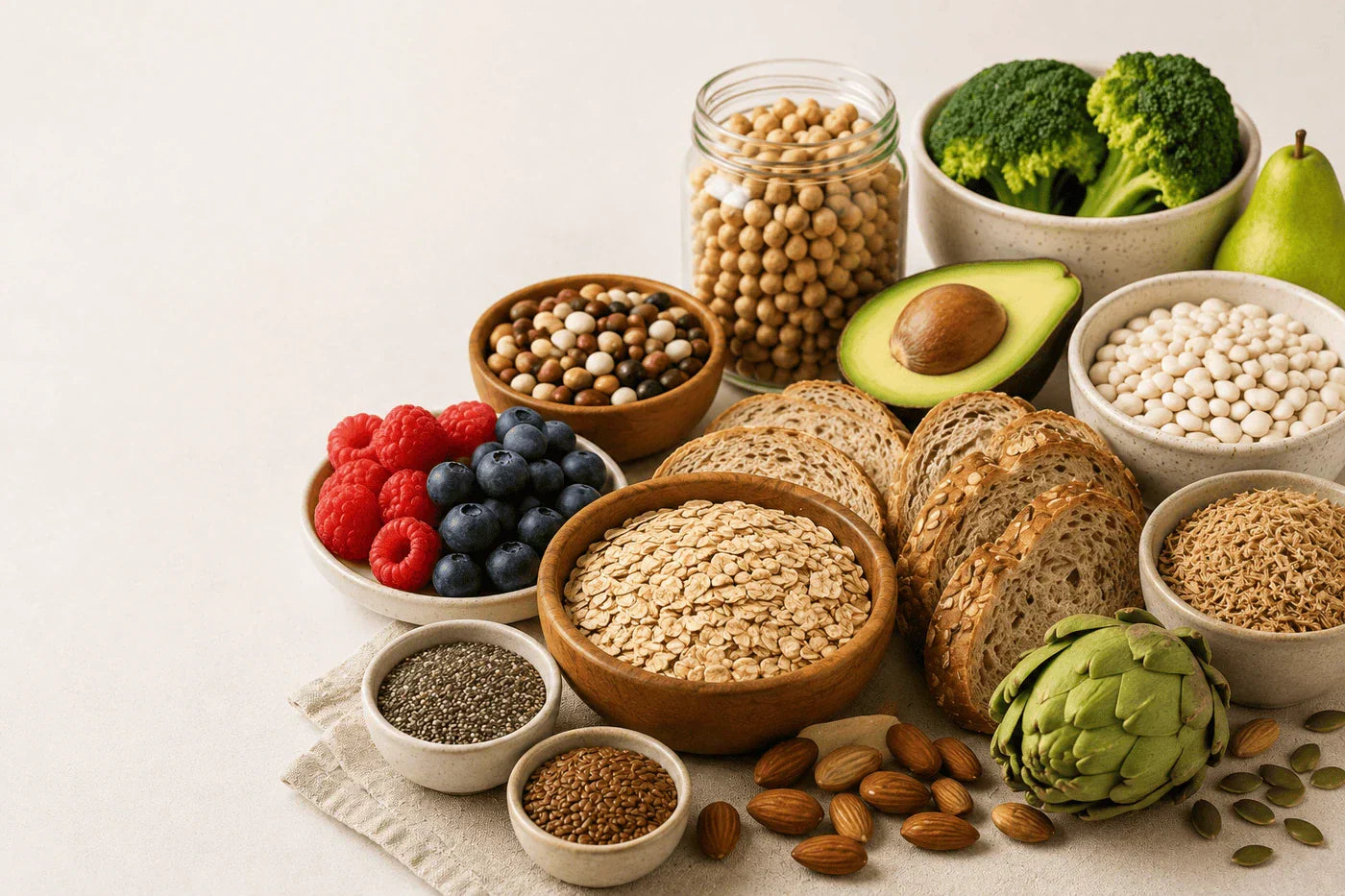
Including a variety of fibre-rich foods provides both soluble and insoluble fibre, each offering unique health benefits.
|
Food |
Benefits |
|
Millets |
They are naturally gluten-free and rich in fibre and various essential minerals. |
|
Oats |
They will keep you feeling full for a longer period of time, along with better digestive health |
|
Lentils |
Lentils are considered a great source of fibre and protein for vegetarians and vegans. |
|
Chickpeas |
It supports satiety and balanced meals |
|
Fruits |
Provide fibre, vitamins and antioxidants |
|
Leafy Greens |
Rich in fibre and micronutrients |
|
Chia Seeds |
High in fibre and healthy fats. Also, keep the person hydrated. |
|
Flaxseeds |
They are known to support digestion and overall body nutrition |
|
Almonds |
They contain fibre, healthy fats and protein |
|
Beans |
Promote fullness and gut health |
It is advisable to include the above-mentioned food items in your daily life. But it is also important to maintain a balance and eat them in moderation, as an excess of anything could be bad for health.
Soluble vs Insoluble Fibre
Before understanding the difference between the two, it is important to know that both these fibres are very essential for good health.
|
Soluble Fibre |
Insoluble Fibre |
|
Forms a gel during digestion |
Adds bulk to stools |
|
Helps slow digestion |
Supports regular bowel movements |
|
Found in oats, chia seeds, and legumes |
Found in vegetables, whole grains, and nuts |
Simple Ways to Increase Fibre Intake
Increasing fiber intake need not be intimidating at all.
Try out:
- Replacing refined grains with millets or oats.
- Including vegetables in every meal.
- Having fruit in one's breakfast.
- Consuming nuts and seeds as snacks.
- Opting for whole foods over ultra-processed products.
- Consuming adequate amounts of water, since fiber needs to be consumed along with it.
Note: Fiber intake should be increased slowly.
A Sample High-Fibre Day could look like-
|
Meal |
Example |
|
Breakfast |
Millet granola with yogurt and berries |
|
Mid-Morning |
Apple with peanut butter |
|
Lunch |
Dal, vegetables, and millet |
|
Evening Snack |
Millet crackers with hummus |
|
Dinner |
Stir-fried vegetables with legumes |
|
Dessert |
A naturally sweetened fibre-rich treat |
The goal is never to achieve perfection but to build consistency.
Common Fibre Mistakes
While increasing fibre is beneficial, there are a few common mistakes to avoid:
- Increasing fibre too quickly.
- Drinking too little water.
- Depending only on supplements instead of whole foods.
- Choosing packaged foods labelled "high fibre" without reading the ingredient list.
- Forgetting to include protein and healthy fats alongside fibre.
A balanced plate always works better than focusing on one nutrient alone.
Making PMOS Nutrition Easier with The Cinnamon Kitchen
Creating a lifestyle that is rich in fibre is easy if there is no shortage of good food choices.
In The Cinnamon Kitchen, our philosophy is simple: better snacking begins with better food ingredients. This is why several of our products are created using naturally fibre-rich foods such as millets, oats, nuts, and seeds.
The Berry & Banana Millet Granola contains a combination of millets, amaranth puffs, almonds, pumpkin seeds, and freeze-dried fruits. The Oat, Fig & Almond Granola is another healthy choice that goes well with yogurt and fruit. Our Methi Millet Crackers serve as a healthy and crispy option compared to other snacking choices. The Almond Flour & Cacao Cookies and the Cacao Peanut Butter go perfectly with a healthy eating regimen.

Our entire product range is made carefully in a dedicated gluten-free kitchen without any artificial additives and preservatives.
Conclusion
Focusing on the benefits of hormone balancing with the help of PMOS does not mean focusing on one particular superfood, but rather forming good eating habits. Increasing your intake of PMOS in foods such as whole grains, beans, vegetables, fruits, nuts, and seeds can be beneficial to your blood sugar regulation and digestion. In fact, small improvements made daily may produce the best results in the long term. Here at The Cinnamon Kitchen gluten free bakery, we strive to make that process easier by offering delicious and healthy snacks.
Frequently Asked Questions
1. How much fibre should someone with PMOS eat each day?
Individual requirements differ but adults usually need about 25-30 grams of fibre per day. Gradual increase and sufficient fluid intake can allow your body to adapt smoothly.
2. Which fruits are good sources of fibre for PMOS?
Apples, pears, berries, oranges and guavas are natural sources of fibre and can be included in a healthy diet of an individual with PMOS.
3. Are fibre supplements better than fibre-rich foods?
Consuming whole foods is the preferred way of receiving fibre because, besides providing fibre, these foods also supply vitamins, minerals, antioxidants, and other substances contained in the plant food matrix.
4. Can eating more fibre help with PMOS-related cravings?
A diet consisting of high fibre foods can provide satiety and help to maintain steady blood glucose level and therefore reduce hunger and cravings for sugars.
5. Where can I buy fibre-rich snacks for PMOS?
Healthy snacks include those made using healthy ingredients like millets, oats, nuts, and seeds. The Cinnamon Kitchen sells a variety of healthy granolas, millet biscuits, cookies, and peanut butter.
Popular Searches
Gluten Free Bread | Best Granola | Gluten Free Snacks | Nut Butter | PCOS Friendly Snacks | Keto Snacks India | Vegan Dark Chocolate
Popular Blog
Which Biscuit is Good for Diabetes | Best Pre Workout Vegetarian Meal | PCOS Friendly Desserts | Substitute of Sugar | Dark Chocolate Benefits for Women
