


In This Article
Who Should Follow a Gluten-Free Diet?
Choosing Better Gluten-Free Foods
The Cinnamon Kitchen's Approach to Gluten-Free Eating
In case you spent even just a couple of minutes browsing any social media network, chances are you have stumbled upon a statement declaring gluten as something "bad for everybody". Some people argue that a gluten-free lifestyle is a key to easy and effortless weight loss, beautiful skin or inexhaustible energy.
With all these misconceptions about gluten circulating on the Internet nowadays, it's quite clear that gluten happens to be among the most poorly understood subjects in nutrition today.
Here's the thing: gluten is not inherently unhealthy and a gluten-free diet does not provide a universal remedy for all problems. Even though a gluten-free lifestyle is necessary for celiac patients and helpful for people sensitive to gluten, many statements regarding gluten cannot be backed up scientifically.
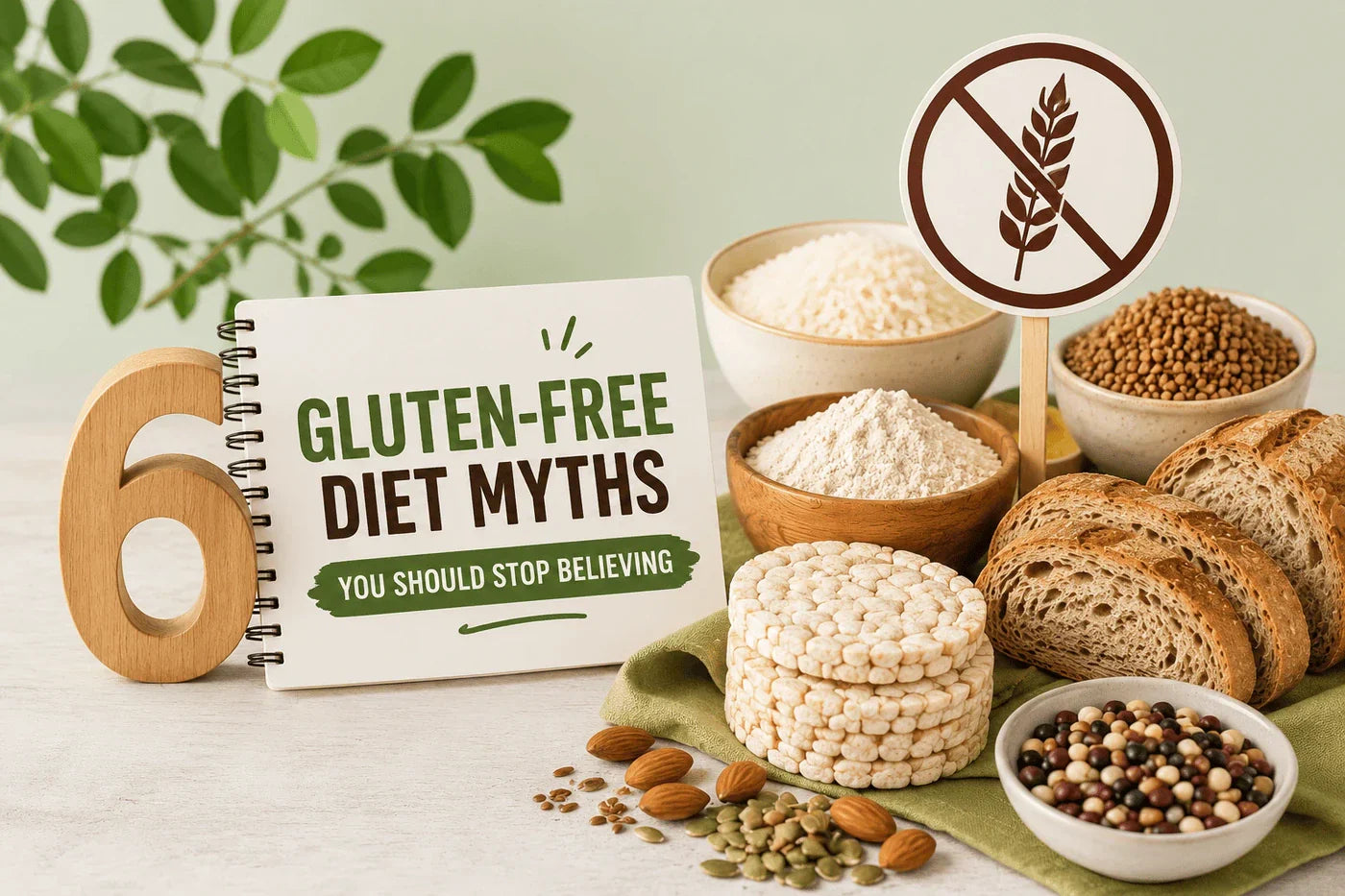
Let's debunk gluten myths and actual gluten facts.
Gluten Myths vs Gluten Facts
Myth 1: Everyone Should Follow a Gluten-Free Diet
Fact: This is probably one of the biggest gluten-free diet myths. A gluten-free diet becomes a necessity for those who have celiac disease and possibly for those who have non-celiac gluten sensitivity. But currently, there are no data supporting the idea that everybody needs to get rid of gluten in their diet. For most healthy people, gluten-containing whole grain products will become the source of fiber, vitamins, and minerals. The point is always to consume healthy foods rather than avoid gluten for no particular reason.
Myth 2: “Gluten-free” Products Are Always Healthier
Fact: Not always. Many processed gluten-free products may still be highly processed and have sugar, refined carbohydrates, and/or bad fats added to their formulations. Just being gluten-free does not automatically mean that a product is healthy.
Rather, it is necessary to consider the following questions:
- What goes into making it?
- Is it high in fiber content?
- Is it protein-rich?
- Is it minimally processed?
Myth 3: Gluten-free diets are a sure weight loss ticket
Fact: Going gluten-free does not automatically mean weight loss. Weight changes are influenced by overall diet, exercise, sleep, stress, and total calorie intake, not just the presence of gluten. Indeed, just substituting normal foods with highly processed gluten-free options can, in some cases, raise total calorie intake. So, healthy eating is not about eliminating one ingredient, but about balance.
Myth 4: Gluten Is the Culprit of All Digestive Troubles
Fact: There are many other reasons why you may have bloating, discomfort in the stomach, and digestive problems. Some of the reasons could be: lactose intolerance, irritable bowel syndrome (IBS), stress, low fiber intake, and food sensitivities. So, gluten isn’t always the cause. If digestive symptoms persist, it’s important to talk to a healthcare professional rather than self-diagnose.
Myth 5: Gluten-Free Food Tastes Bad
Fact: Years ago gluten free products were often known to be dry or bland. Today, it’s a world away. The use of innovative ingredients like almond flour, millets, oats (certified gluten free), nuts, and seeds has made it possible to produce gluten-free foods with excellent taste and texture. Modern gluten-free baking is as much about flavour as it is about nutrition.
Myth 6: Gluten-Free Means Going Grain-Free Totally
Fact: That’s another common misconception. There are plenty of healthy grains you can still eat on a gluten-free diet. Some of the grains that can be consumed safely include millets, rice, buckwheat, quinoa, amaranth, and many more. These grains add texture and variety to meals, as well as providing fibre, vitamins and minerals.
For a better understanding of Gluten Myths vs Gluten Facts, here is the table -
|
Gluten Myths |
Gluten Facts |
|
A gluten-free diet is for everyone. |
Only a few individuals with medical issues are advised to go on a gluten free diet. |
|
Gluten free means healthy always. |
Ingredient quality matters more than labels alone. |
|
Going gluten free can help in weight loss. |
Weight loss depends on overall lifestyle. |
|
Gluten causes digestive issues to all. |
Digestive symptoms have many possible causes. |
|
Going gluten-free means eating no grains. |
Many of the nutritious grains like jowar, ragi, etc are naturally gluten-free. |
Who Should Follow a Gluten-Free Diet?
Gluten-free diets are recommended to people who have:
- Celiac disease.
- Non-celiac gluten sensitivity.
However, for all others, a gluten-free diet is not necessarily required unless recommended by a doctor. One must continue to eat a balanced and unprocessed diet for a healthier lifestyle.
Choosing Better Gluten-Free Foods
In case you choose to go for the gluten-free diet, you should ensure that what you eat is naturally nutritious. Here are some of the things to consider while going gluten-free:
- Whole food items
- Grains high in fibre
- Nuts and seeds
- Healthy fats
- Short ingredient lists
- Zero processed
Note: Do not assume all gluten-free products are nutritious. That’s why it becomes really important to check the ingredient list and their nutrition value.
The Cinnamon Kitchen's Approach to Gluten-Free Eating
At The Cinnamon Kitchen, we understand that being gluten free does not have to mean sacrificing taste and quality at all. For that reason, every one of our products is manufactured in a 100% dedicated gluten-free facility, reducing the chances of cross contamination, and making it more comfortable for individuals who want to be gluten free.
Our approach is not about just eliminating the gluten component. We pay attention to selecting only the right ingredients such as millets, almond flour, nuts, seeds, olive oil, and natural sweeteners in order to make healthy and tasty snacks.
From millet granola, to protein cookies , to millet crackers to our range of Nut Butters, you will find that no artificial additives or preservatives are used in any of our products because we believe in using better ingredients.

Frequently Asked Questions
1. Is it possible for children to be on a gluten-free diet?
It is possible for children to go on a gluten-free diet if it is prescribed by a doctor for a condition such as celiac disease or gluten sensitivity. However, if there is no need for that, it is advisable to seek a healthcare expert's advice before making any drastic changes to their diet.
2. How soon do the effects of the gluten-free diet become noticeable?
People with celiac disease and gluten sensitivity can start seeing visible differences within a week of starting the gluten-free diet. Although it may vary from person to person.
3. Which nutrients should I be mindful of when I am on a gluten-free diet?
A well-rounded gluten-free diet should comprise sufficient levels of fiber, iron, calcium, vitamin B and whole grains. Consumption of naturally gluten-free foods like millets, quinoa, legumes, nuts and seeds can be beneficial in this regard.
4. Can I enjoy dining out when I am on a gluten-free diet?
Yes, today many restaurants provide gluten-free options, though it is advisable to inquire about the ingredients, food preparation processes and chances of any cross contamination before ordering.
5. Where should I get wholesome gluten-free snacks?
If you are on the lookout for wholesome gluten-free snacks, then try some of the products available at The Cinnamon Kitchen. All our products are made in a 100% gluten-free facility. We also take care of no cross contamination. So that our customers get the best quality gluten-free products available in the market.
Popular Searches
Gluten Free Bread | Best Granola | Gluten Free Snacks | Nut Butter | PCOS Friendly Snacks | Keto Snacks India | Vegan Dark Chocolate
Popular Blog
Which Biscuit is Good for Diabetes | Best Pre Workout Vegetarian Meal | PCOS Friendly Desserts | Substitute of Sugar | Dark Chocolate Benefits for Women
