


PCOS has been renamed to PMOS, which has blown up the internet, and many creators have come up to support this. By now, you would have definitely come across this renaming in some way or other. But what really made the researchers/doctors change the term from PCOS to PMOS? To understand the real logic behind this renaming and why it is better for the females dealing with this condition, let's deep dive into this topic through our blog.
Why Was The Name PCOS Considered Problematic?
For many years, PCOS, i.e., Polycystic Ovary Syndrome, was used by medical professionals to describe an endocrine disorder among females (impacting 8-13% of women globally). This was a general term mainly associated with issues like hormonal imbalance, fertility issues, irregular periods, and some other long-term health risks.
But the constant questioning by the researchers and healthcare professionals on the term 'PCOS' made them adopt the term 'PMOS' (Poly Metabolic Ovarian Syndrome), as it highlights the metabolic and hormonal issues rather than just something that is only related to the ovaries.
If we go back a little in time, the term 'PCOS' came up when several immature follicles were seen on ultrasound among women. But with time, they found several limitations associated with this term, such as:
- It is essential to understand that not everyone diagnosed with PCOS has cysts in their ovaries. So, the term itself is flawed in its nature.
- Various studies have found that ovaries are not the root cause, but the metabolic and hormonal dysfunction is, and ovaries are only a part of much bigger physiological changes. The PMOS involves various conditions like insulin resistance, chronic-grade inflammation, neuroendocrine dysfunction, and altered androgen production in the female body.
- PCOS, as the term was, created a misunderstanding among individuals, as it was assumed that females diagnosed with PCOS would have fertility issues and cysts. But all these assumptions were scientifically incorrect.
For a thorough understanding of PCOS vs PMOS, you can refer to the table below:
|
Aspect |
PCOS (Polycystic Ovary Syndrome) |
PMOS (Polyendocrine Metabolic Ovarian Syndrome) |
|
Primary Focus |
Ovarian appearance and reproductive symptoms |
Metabolic, hormonal and reproductive health |
|
What The Name Suggests |
A condition mainly related to ovarian cysts |
A condition involving multiple metabolic pathways |
|
Root Cause Understanding |
Historically linked to ovarian abnormalities |
Recognized as a metabolic and hormonal disorder affecting the whole body |
|
Role Of Ovaries |
Often viewed as the central problem |
One part of a larger metabolic dysfunction |
|
Insulin Resistance |
Acknowledged but not reflected in the name |
Considered one of the key drivers of the condition |
|
Inflammation |
Less emphasis in the terminology |
Recognized as an important contributing factor |
|
Hormonal Imbalance |
Present but often viewed through a reproductive lens |
Considered a core feature alongside metabolic dysfunction |
|
Symptoms Better Explained |
Irregular periods, ovulation issues, fertility concerns |
Irregular periods, fertility issues, insulin resistance, fatigue, sugar cravings, weight gain, inflammation and hormonal symptoms |
|
Common Misconception |
Every individual has ovarian cysts and fertility issues |
Highlights that the condition extends far beyond the ovaries |
What Does PMOS Mean?
Poly Metabolic Ovarian Syndrome” (PMOS) is an alternative name suggested to draw attention to the metabolic causes of this condition. The use of the word "polymetabolic" reflects the reality, which is the involvement of several metabolic pathways participating at once, such as the following:
- Metabolism of glucose
- Insulin pathway
- Fat metabolism
- Inflammatory process
- Regulation of reproductive hormones
With the renaming, it has been established that the role of the ovaries persists; however, they are no longer regarded as the sole villain in this medical condition.
What Symptoms Does PMOS Explain Better Than PCOS?
When PCOS was limited to just the ovaries, PMOS reflects the wider range of symptoms experienced by females living with this condition. This shift acknowledges the overall health, including metabolic, inflammatory, and hormonal imbalances.
Some of the symptoms explained better by PMOS are:
- Reproductive Symptoms: Irregular periods, delayed or absent ovulation, difficulty in conceiving, and polycystic ovaries. All these symptoms were previously attributed to PCOS, but now it is accepted to not the only ones among the women living with this condition.
- Hormonal Symptoms:PMOS accepts that hormonal changes in a female body can manifest in the form of insulin resistance, fatigue, feeling sleepy after meals, sudden energy crashes, weight gain around the abdomen region, specifically, and then difficulty in losing weight. Also, it is possible that metabolic changes can occur after years of observing reproductive changes.
- Other Symptoms: Chronic inflammation is linked to PMOS. Some other symptoms that females also experience are brain fog, low energy levels, low recovery after exercise, often mood fluctuations, and increased cardiovascular risks.
PMOS recognised the above-mentioned symptoms that make it offer a complete understanding of what the females experience beyond the reproductive challenges.
How food and snacking fit into PMOS management
Living with PMOS often means navigating sugar cravings, energy crashes, and hunger that seems to return too quickly. While there is no single food solution, choosing snacks made with thoughtful ingredients can help in leading a more balanced life.
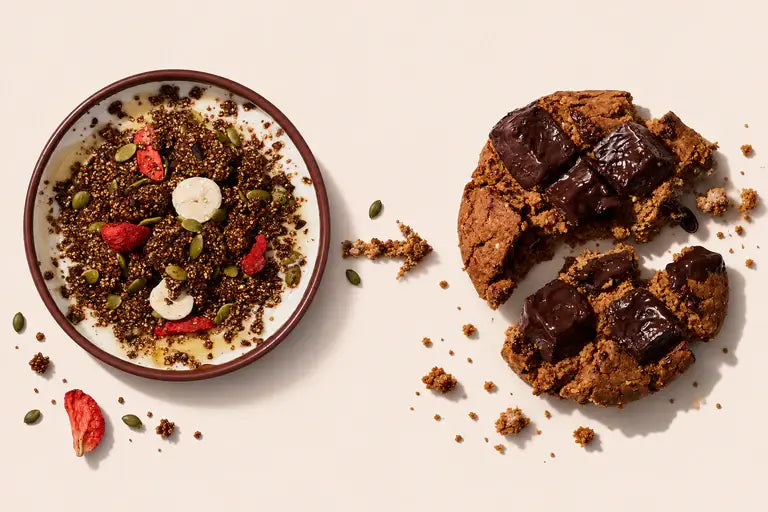
At The Cinnamon Kitchen, we ensure our snacks are created by not adding any refined sugars and use only such ingredients as almond flour, nuts, seeds, and millets. Starting from protein-rich cookies to fibre-filled granola, our snacks are meant for anyone who prefers treats that are tasty but not filled with refined sugars.

After all, healthy eating is supposed to be fun and not a punishment.
Conclusion
PMOS is not merely a rebranding; it is a way to comprehend the problem as a whole. Taking into account the influence of metabolism and hormones will allow women to make more educated decisions that are beneficial for their health in general. Of course, there is no one product that will control PMOS, but good nutrition may help. This is why we at The Cinnamon Kitchen strive to develop healthy snacks for you.
Frequently Asked Questions
1. Does PMOS increase the risk of other health conditions?
PMOS is often linked to increasing your chances of developing insulin resistance, type 2 diabetes, heart disease, and metabolic syndrome. Health checks and good health practices will go a long way in maintaining your well-being.
2. Can lean women also have PMOS?
Yes. PMOS can affect women of all body types. While some may gain weight, not all women with PMOS are overweight.
3. Where can I buy PMOS-friendly treats?
If you are searching for treats that can be safely enjoyed by women with PMOS and are produced from carefully selected ingredients, check out the products of The Cinnamon Kitchen. We have everything you may need, from oat granolas to oat cookies, and all the products are produced from organic ingredients, naturally sweetened and free from additives and preservatives.
4. What should a person with PMOS include in their diet?
Pay attention to your intake of nutritious food in terms of proteins, fiber, and healthy fats. Make sure to eat wholesome food items, including whole grains such as millets and oats, lots of vegetables, fruits, nuts, seeds, and legumes.
Popular Searches
Gluten Free Bread | Best Granola | Gluten Free Snacks | Nut Butter | PCOS Friendly Snacks | Keto Snacks India | Vegan Dark Chocolate
Popular Blog
Which Biscuit is Good for Diabetes | Best Pre Workout Vegetarian Meal | PCOS Friendly Desserts | Substitute of Sugar | Dark Chocolate Benefits for Women
