


In This Article
- What are Clean-Label Snacks?
- The Real Cost Breakdown
- Beyond Ingredients: Hidden Cost You Don’t See
- Why are healthy snacks expensive in India?
- Quick Comparison: Clean Vs Regular Snacks
- Myths Vs Facts
- Tips for Making Clean Eating Feel Worth It
Ever wondered why a ₹30 bakery cookie versus a ₹250 “No-maida, No sugar” cookie are priced so differently when they are just cookies? This is the question many of us ask when buying healthy snacks in India. But the answer is always in front of our eyes, in THE LABEL!
Products made with simple and recognisable ingredients, along with minimal processing, create that price gap because this simplicity comes with a price. From sourcing high-quality ingredients to producing in small batches, there are multiple factors behind why healthy snacks are expensive. This blog will break down the price gap and help you understand what exactly you are paying for and whether it's worth it.
What are Clean-Label Snacks? Clean Label Snacks Meaning
Clean-label snacks or products are made with simple, clean and familiar ingredients, the ones you can easily recognise and trust. The idea is very straightforward; if you can read it and understand it, it belongs there.
What sets them apart from usual snacks?
- Transparent Ingredients: Healthy snacks in India use ingredients that you actually understand without any hidden additives. Things like jaggery, oats, nuts or dates instead of artificial sweeteners or preservatives.
- Minimal Processing: The ingredients used in clean label products are kept close to their natural form, not treated chemically or highly refined.
- No Unnecessary Extras: They have no extras like artificial colours, flavours or a long ingredient list.
For example, a clean-label Savoury Snack might have honey, seeds and nuts while a regular one may contain corn syrup or stabilisers.

In short, healthy snacks online focus on simplicity and trust; what you see is what you eat.
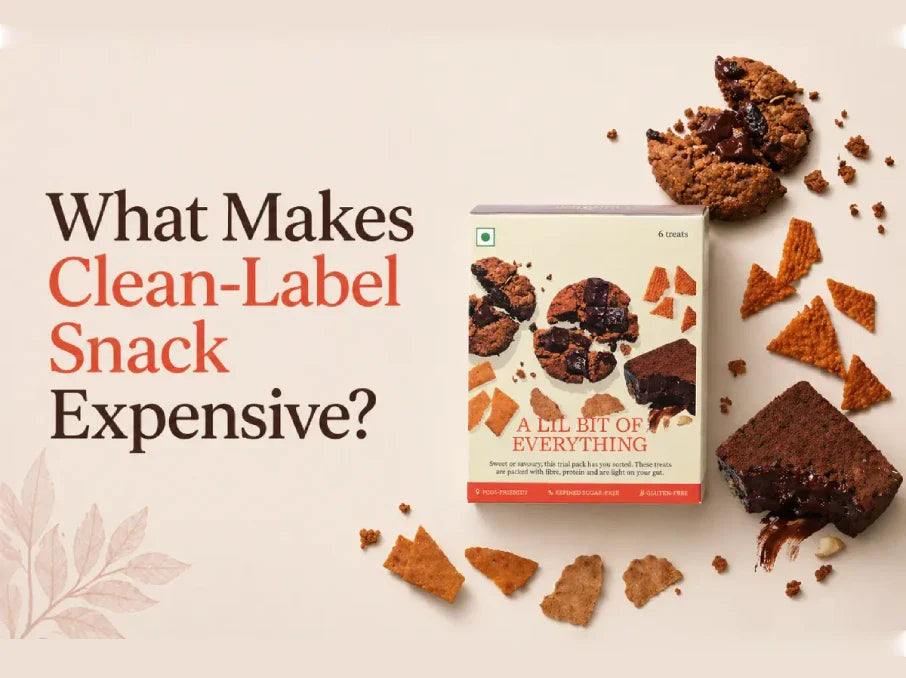
The Cinnamon Kitchen, one of the top 10 bakeries in Delhi brings you Healthy Cookies Online, in multiple varieties and various other healthy snacks without preservatives in India, with multiple options to choose from.

The Real Cost Breakdown: What Makes Clean Label Snacks So Expensive
To understand the price gap, you have to understand what goes into making a clean-label snack:
-
Ingredient Quality
Clean-label snacks rely on premium, natural ingredients instead of cheap, artificial additives. For example, our Almond Flour Cacao Cookie use almond flour, 70% dark vegan chocolate and other healthy ingredients instead of maida and refined sugar. These alternatives are comparatively more expensive and are often sourced in smaller quantities.

-
Small-Batch Production
Most clean-label snacks are produced in small-batches as they avoid using preservatives. A pack of namkeen might last you months but a preservative-free granola cereal needs to be produced fresh, sold quickly and consumed before it expires.
This means that brands can’t produce in bulk like large FMCG companies. Without large-scale manufacturing, they don’t benefit from cost efficiencies and this results in higher manufacturing costs per unit.

-
Shelf Life & Logistics
Shorter shelf life affects logistics. Faster delivery, better storage and careful packaging are a necessity. There’s also a prominent risk of wastage, therefore the brands factor into pricing.
These become key factors contributing to the higher clean label food cost and pricing gap of healthy snacks.
Beyond Ingredients: Hidden Cost You Don’t See
The cost of a clean-label product is not only determined by what goes into it, but also by what happens behind the scenes.
Ethical Sourcing
Clean-label brands aim for high-quality products, for which they work closely with local farmers and small producers instead of large-scale suppliers. This process includes fair trade, better wages and sustainable farming methods. While this ensures high quality ingredients and improves livelihoods, it also increases procurement costs compared to mass-produced alternatives.
R&D Effort
Brands providing healthy, high quality snacks ensure that what goes out is the best version of it. Therefore, they go through multiple rounds of trial and error to make sure that the taste and texture are just perfect. Whether it’s the crunch of a baked snack or perfecting a gluten-free cake, this research and development process takes time, investment and expertise.
Packaging & Branding
As a clean-label brand, we invest in transparent and informative packaging, which involves clearly listing ingredients as well as nutritional value. Our packaging of products and healthy gift hampers is often eco-friendly and premium in design, reflecting the brand values and purpose. This intentional packaging adds to the overall cost.

Why are healthy snacks expensive in India?
The market for healthy snacks in India is still a niche, but it is growing rapidly with rising health awareness. Unlike the global markets, where demand is high and production is scaled, Indian brands often work in smaller volumes, which leads to high per-unit cost.
Additionally, price consciousness plays a huge role as Indian consumers are used to low-cost, mass-produced snacks, so even moderately priced healthy snacks in India can feel expensive in comparison.
Another factor is import dependence. Ingredients like quinoa, exotic nuts or natural sweeteners are often sourced internationally which increases cost due to import duties and logistics.
These factors make healthy snacks in India feel premium, even when brands are trying to balance quality, ingredients, cost and accessibility for the consumers.
Quick Comparison: Clean Vs Regular Snacks
The difference between clean-label and regular snacks is more than just the price. It reflects the quality, process and long term value.
|
FACTOR |
CLEAN-LABEL SNACK |
REGULAR SNACK |
|
Ingredients |
Natural, Minimal |
Artificial Additives |
|
Shelf Life |
Shorter |
Longer |
|
Production |
Small Batch |
Large Production |
|
Nutrition Value |
Higher |
Lower |
|
Cost |
Higher Upfront |
Cheaper Upfront |
Myths Vs Facts
There is a lot of confusion, misconceptions and stereotypes when it comes to healthy snacks, but here is the clear breakdown:
|
MYTH |
FACT |
|
Healthy snacks are overpriced. |
The prices are for real ingredient quality, sourcing and production cost. |
|
All expensive snacks are healthy. |
Price never guarantees quality; clean-label does. |
|
Healthy snacks don’t taste good. |
Clean-label brands focus on both taste and nutrition. |
|
Healthy snacks don’t last long, so it's not worth it. |
Shorter shelf life means fewer preservatives and fresher products. |
|
Only imported brands are actually healthy. |
Many modern Indian brands offer high-quality healthier snack options. |
|
Healthy snacks are only for fitness enthusiasts. |
They are for anyone switching towards better and healthier eating habits. |
TCK Making Clean Eating Feel Worth It
At The Cinnamon Kitchen, we make sure that the idea isn’t about making healthy snacks feel exclusive, but to make everyday eating more thoughtful and intentional. Each product is curated with clean, recognisable ingredients like almond flour, nuts and natural sweeteners, ensuring that neither quality nor taste is compromised. In fact, the ingredients are so familiar and accessible that you could recreate them at home if you wish to, because there’s nothing hidden or hard to understand.
Clean-label brands like The Cinnamon Kitchen balance recipes that feel healthier, lighter and delicious while being honest about what you are having. It is never about being just premium for the sake of it, but about creating products that justify their value through what goes into and how they’re made.
