


Key Takeaways
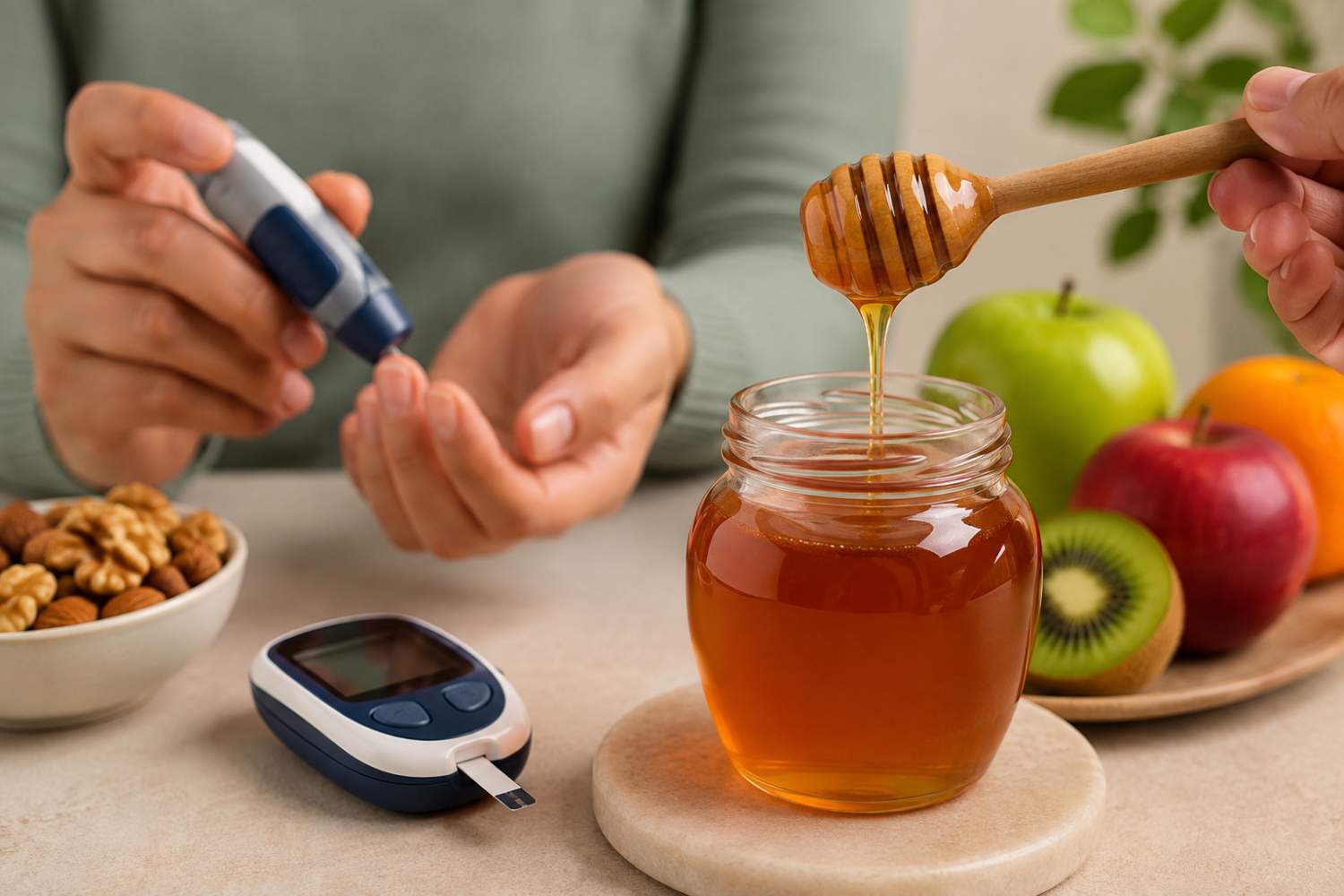
- People with diabetes may be able to include honey in their diet, but honey contains naturally occurring sugars and carbohydrates that can affect blood glucose.
- Honey is different from refined table sugar in its composition, flavour and processing, but being natural does not make it sugar-free.
- Honey's glycemic index can vary depending on the type and other factors, so GI alone should not determine whether someone with diabetes chooses to consume it.
- Portion size, total carbohydrate intake and the rest of the meal are important considerations when including honey in a diabetes-conscious diet.
- Honey can be used in desserts and snacks for sweetness and flavour, but honey-containing foods should still be evaluated based on their overall ingredients and nutrition profile.
In this Article
What Makes Honey Different from Regular Sugar?
Is Honey Better Than Sugar for People with Diabetes?
What Is the Glycemic Index of Honey?
Is Raw Honey Better for People with Diabetes?
Can Honey-Sweetened Desserts Be Part of a Diabetes-Conscious Diet?
Healthier Ways to Satisfy Sweet Cravings
Introduction
It is well known that honey has been used as a natural sweetener for hundreds of years and that honey is a common food component in drinks, breakfasts, and other snacks and desserts. However, a frequently asked question for people who suffer from diabetes is: Can diabetics consume honey?
The simple yes or no answer is not applicable.
Diabetics can possibly include honey in their diet according to their particular dietary needs. However, honey contains sugars and carbohydrates, so it can affect blood glucose and should be considered as part of the overall carbohydrate intake.
So, while honey is different from refined table sugar, it should not be considered a sugar-free or unlimited sweetener simply because it is natural.
For anyone looking for honey for sugar patient dietary guidance, portion size and overall carbohydrate intake are important considerations.
What Makes Honey Different from Regular Sugar?
Honey and table sugar are two sweeteners with their own compositions and properties.
Honey is a bee product made from flower nectar. The composition of honey may depend on different things such as the flower source and processing process. Main components of honey include glucose, fructose, and water with trace amounts of other substances.
The table sugar is also called sucrose; it consists mainly of sucrose and is extracted from sugarcane or sugar beet.
Besides, honey has a unique taste and smell which may differ from type to type, making it not only a sweetener, but also a flavoring agent that may affect the foods and desserts.
There is, however, one thing to keep in mind regarding diabetics:
Honey still includes sugars and carbohydrates. This means that substituting table sugar for honey does not make any difference in terms of counting carbohydrates.
|
Feature |
Honey |
Table Sugar |
|
Source |
Flower nectar collected by bees |
Sugarcane or sugar beet |
|
Main sugars |
Mainly glucose and fructose |
Mainly sucrose |
|
Flavour |
Varies depending on floral source |
Primarily sweet |
|
Processing |
Varies by type |
Refined to produce granulated sugar |
|
Carbohydrates |
Contains naturally occurring sugars |
Primarily carbohydrate in the form of sucrose |
The difference between honey and sugar is therefore more than simply “natural vs refined.” They are different ingredients, but both contribute carbohydrates to the diet.
Can Diabetics Eat Honey?
People with diabetes may be able to eat honey in moderation. However, the amount that works for one person may not be appropriate for another.
When considering honey for diabetics, it is important to consider portion size, total carbohydrate intake and individual blood glucose response.
As per a research , Honey contains 80% carbohydrates that can be broken down into glucose during digestion, affecting blood glucose levels.
This does not necessarily mean that people with diabetes need to completely eliminate honey from their diet. Many people also ask, " Can diabetic patients eat honey,” and the answer depends on their individual dietary needs and blood glucose management.
Diabetes meal planning can be individualised, and people may still be able to enjoy foods they like while paying attention to portion sizes and overall carbohydrate intake.
If you enjoy honey, some practical considerations include:
- Choosing a modest portion rather than using large amounts.
- Counting the carbohydrates from honey as part of your overall intake.
- Considering what other carbohydrate-containing foods are included in the same meal.
- Paying attention to your blood glucose response if you monitor it.
- Following any personalised dietary advice provided by your doctor or registered dietitian.
There is no universal amount of honey that can be labelled “safe” for every person with diabetes.
Does Honey Raise Blood Sugar?
Yes, honey can raise blood glucose because it contains sugars and carbohydrates.
How much it affects an individual can depend on several factors, including the amount consumed, the rest of the meal and individual differences in glucose response.
For example, adding a small amount of honey to a meal is different from consuming a large serving of a honey-sweetened dessert alongside other carbohydrate-rich foods.
This is why the overall meal matters. Looking only at whether a food contains honey or refined sugar does not provide the complete picture.
Is Honey Better Than Sugar for People with Diabetes?
Honey is often described as a healthier alternative to refined sugar because it is natural and contains small amounts of other naturally occurring compounds.
However, the answer is more nuanced when diabetes is the focus.
Honey and table sugar are different ingredients, but both provide sugars and carbohydrates that can affect blood glucose. Honey may have a different glycemic response from table sugar, but that alone does not make it a diabetes-friendly or unlimited sweetener.
The choice between honey and sugar can therefore depend on more than blood glucose alone.
Honey can provide:
- A distinctive natural sweetness
- Different flavour profiles depending on the variety
- A useful ingredient for baking and desserts
- Small amounts of naturally occurring compounds
For people with diabetes, however, the amount consumed and how it fits into the overall eating pattern remain important.
What Is the Glycemic Index of Honey?
The glycemic index (GI) ranks carbohydrate-containing foods according to how quickly they can raise blood glucose compared with a reference food.
Honey does not have one fixed GI value. Its glycemic response can vary depending on factors such as the type of honey and its composition.
Some types of honey may have a lower GI than table sugar.
However, a lower GI does not mean that honey is carbohydrate-free or that it can be consumed without considering portion size.
GI can be one factor to consider when choosing foods, but it should not be the only factor used to determine whether a food fits into an individual's diabetes meal plan.
Is Raw Honey Better for People with Diabetes?
Raw honey is often perceived as a healthier alternative because it is less processed.
However, raw honey still contains naturally occurring sugars and carbohydrates and can affect blood glucose.
Being raw does not make honey sugar-free or automatically make it suitable for everyone with diabetes.
If you choose raw honey for its flavour or other food qualities, the same considerations around portion size and overall carbohydrate intake still apply.
Can Honey Cause Diabetes?
A common question is, does honey cause diabetes? No, honey does not directly cause diabetes.
Diabetes is a complex condition influenced by multiple genetic, metabolic and lifestyle factors.
For type 2 diabetes, factors such as genetics, physical activity, body weight and overall lifestyle can influence risk. Maintaining healthy eating and physical activity habits can help reduce the risk of developing type 2 diabetes.
Honey does contain sugars and calories, so regularly consuming large amounts of sugary, calorie-dense foods can contribute to excess calorie intake and weight gain.
The important distinction is that eating honey does not directly “give you diabetes.” Overall dietary and lifestyle patterns are much more relevant to diabetes risk.
Can Honey-Sweetened Desserts Be Part of a Diabetes-Conscious Diet?
Having diabetes does not necessarily mean giving up every food that tastes sweet.
As per a research , Many people can continue to enjoy favourite foods by paying attention to portions, frequency and their overall dietary pattern.
This can include desserts and snacks made with honey.
Ingredients such as Almond Butter can also add flavour and texture to snacks and desserts while contributing fats and protein.
At The Cinnamon Kitchen, honey is used in selected desserts and snacks to provide sweetness and flavour.
If you are managing diabetes and choose a honey-containing product, consider the complete nutrition profile rather than focusing only on the type of sweetener used.
Look at:
- Serving size
- Total carbohydrates
- Total sugars
- Other carbohydrate-containing ingredients
- How the food fits into the rest of your meal or day's intake
Honey-sweetened does not automatically mean diabetes-friendly, just as refined-sugar-free does not automatically mean carbohydrate-free.
This distinction can help you make more informed choices while still enjoying the foods you love.
Healthier Ways to Satisfy Sweet Cravings
Sugar free cookies can be another option when you want something sweet, but it is still important to check the serving size and overall carbohydrate content. Living with diabetes doesn't mean giving up the foods you enjoy. Choose snacks made with thoughtfully selected ingredients and enjoy them in moderation. When choosing snacks for diabetic patients , it is helpful to consider serving size, total carbohydrates, sugars and the other ingredients in the product.
Gluten Free Snacks can also be considered when choosing treats based on individual dietary preferences or requirements, while checking the complete nutrition information remains important.
Sugar-Free & Flourless Cacao Cake
Rich, chocolatey, sugar-free and flourless cacao cake. No refined flour used and sweetened with xylitol and stevia. Slice and serve as a dessert or warm slightly for a soft, fudgy consistency. A sugar free cake can be an alternative for those looking for a sweet treat, although the complete nutrition profile should still be considered.
Sugar-Free Cacao & Berry Rocks
Crunchy Sugar-Free Cacao & Berry Rocks is a satisfying blend of chocolate, nutty and fruity flavours made from dark chocolate, cashews, pumpkin seeds and freeze-dried raspberries.
Cacao and Orange Brownie Cookie
Cacao & Orange Brownie Cookie combines rich dark chocolate and fresh orange zest for a delicious balance of chocolate and citrus flavours. It’s a tasty choice when you’re craving something sweet.
A walnut brownie can also be enjoyed as an occasional treat, with attention to serving size and its overall carbohydrate content.
Sugar-Free & Flourless Cacao Travel Cake
The Sugar-Free Cacao Travel Cake is soft and rich, and easy to transport making it a convenient choice for travel, work or an afternoon snack.
Conclusion
Honey is one of the ingredients that can add natural sweetness, flavour and character to desserts and snacks. At The Cinnamon Kitchen, we use honey in selected products as part of our approach to creating thoughtfully made treats. You can also explore The Cinnamon Kitchen bakery website to browse its range of thoughtfully made baked treats and snacks
If you enjoy honey-based desserts, you do not necessarily have to think of them as an “all or nothing” choice. Instead, consider the serving size, ingredients and nutrition information of the individual product and how it fits into your overall eating pattern.
For people with diabetes, the most useful approach is to make informed choices based on the complete food rather than assuming that the presence or absence of one particular sweetener tells you whether a product is suitable for you.
FAQs
Can diabetics eat honey?
People with diabetes may be able to include honey in moderation. Honey contains sugars and carbohydrates that can affect blood glucose, so portion size and overall carbohydrate intake should be considered. If you are wondering can a diabetic take honey, it may be possible in moderation depending on individual dietary needs.
Does honey raise blood sugar?
Yes. Honey contains sugars and carbohydrates that can raise blood glucose. The response can vary depending on portion size, the rest of the meal and individual factors.
Is honey better than sugar for people with diabetes?
Honey and table sugar are different ingredients, but both contain carbohydrates that can affect blood glucose. Honey's natural origin does not automatically make it a better choice for diabetes management.
How much honey can a person with diabetes have?
There is no universal portion that applies to everyone with diabetes. The appropriate amount depends on individual dietary needs, blood glucose goals, medication and overall carbohydrate intake.
Can people with type 2 diabetes eat honey?
Some people with type 2 diabetes may be able to include honey in their diet. However, because honey contains carbohydrates, it should be considered as part of their overall meal plan. When choosing honey for diabetic patient dietary needs, portion size and overall carbohydrate intake should be considered.
Is raw honey safe for people with diabetes?
Raw honey still contains sugars and carbohydrates and can affect blood glucose. Being raw does not make it sugar-free or automatically suitable for everyone with diabetes.
What is the glycemic index of honey?
Honey does not have one fixed GI value. Its glycemic response can vary depending on the type and other factors. A lower GI does not mean honey can be consumed without considering portion size and total carbohydrate intake.
Can honey cause diabetes?
No. Eating honey does not directly cause diabetes. Type 2 diabetes is influenced by a combination of genetic, metabolic and lifestyle factors.
Can people with prediabetes eat honey?
People with prediabetes may be able to include small amounts of honey as part of an overall balanced eating pattern. However, honey still contributes sugars and carbohydrates, so portion size and overall dietary intake are important.
Is honey better than jaggery for diabetes?
Honey and jaggery both contain sugars and carbohydrates. Neither should automatically be considered a diabetes-friendly or unlimited sweetener simply because it is natural or less refined.
Popular Blogs
Types Of Millets | Gluten Free Foods | Muesli Vs Granola | Pre Workout Snacks | Diabetic Dessert Recipes |Is Granola Healthy | Almond Butter Vs Peanut Butter | Sattvic Foods
