


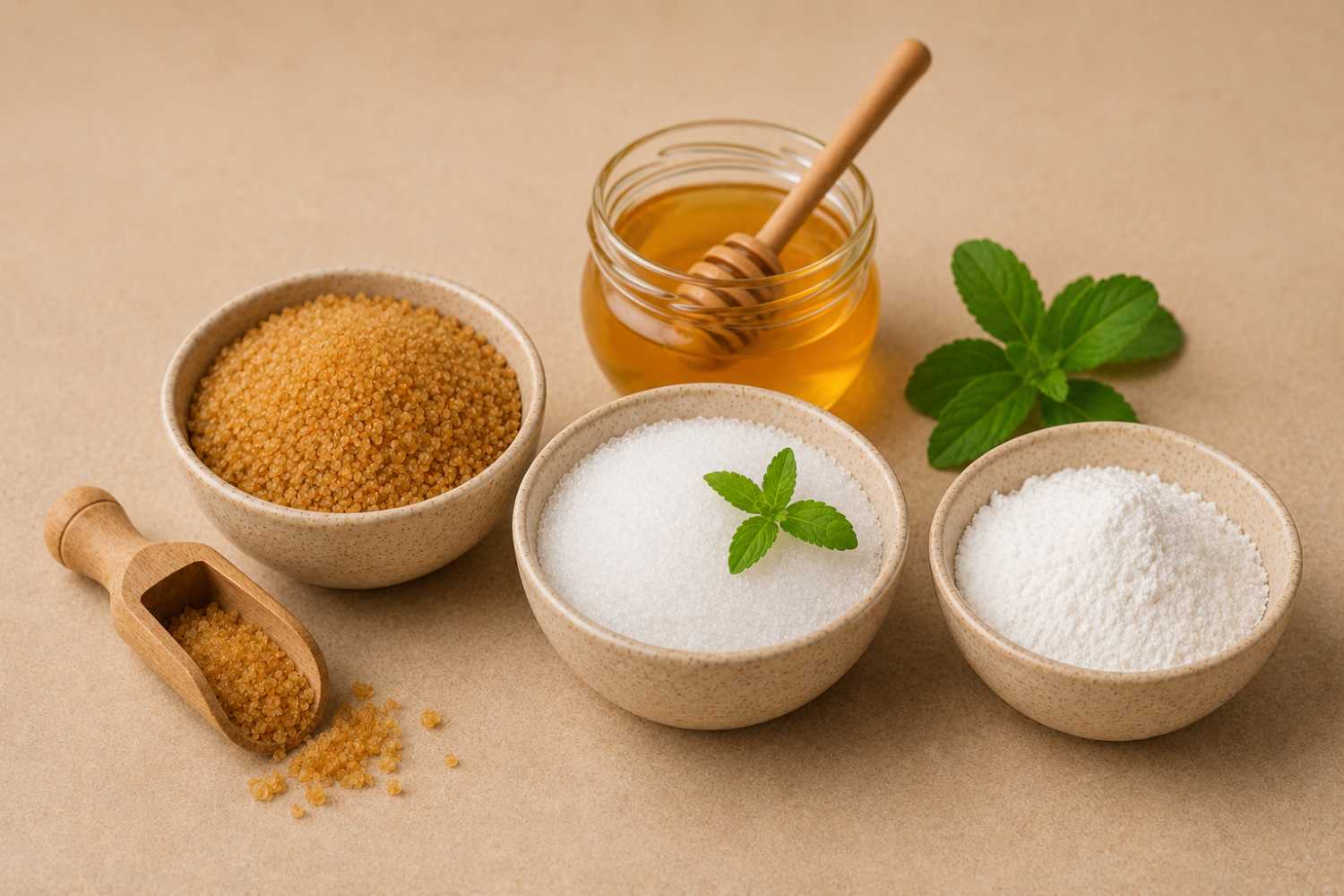
If you have recently been diagnosed with diabetes or are only seeking ways to reduce your sugar intake, it is quite likely that you have done some research on foods which say "sugar free" or "no sugar added", and you have asked yourself…
"What is the ingredient which makes this item sweet?"
It is an absolutely valid question to ask because there are various alternatives to sugar that can be used. While some are natural alternatives to sugar, others are sugar alcohols, and still others are artificial sweeteners. While they taste equally sweet, they do not affect the body the same way.
So how do you pick the correct one?
Well, here is some help.
Why Do People With Diabetes Look For Sugar Alternatives?
Regular sugar is converted to glucose by our body, which then enters our bloodstream, causing high blood sugar. It is at this stage that the hormone insulin comes in to help transport the glucose to the body cells.
In the case of diabetic patients, the whole process does not occur efficiently; this is why there is a need to control the amount of carbohydrates they consume.
It does not mean that they cannot take desserts.
What is needed is just to be more careful about the types of desserts one eats.
This is where artificial sweeteners come in.
What Exactly Are Sugar Substitutes?
Sugar substitutes are additives that are used to add sweetness without sugar.
They can be either naturally occurring or artificially produced. They can either contain calories or be nearly calorie free. The question here is not about choosing sugar substitutes, but about choosing the right sugar substitutes.
The Most Common Sugar Substitutes
1. Stevia
Stevia is extracted from the leaves of the plant called Stevia rebaudiana.
It is a highly effective sweetener that is much sweeter compared to regular sugar, which means that only a small amount is required.
Being practically devoid of calories and having little impact on blood glucose levels, it has become very popular among those who try to reduce their sugar consumption.
Stevia is suitable not only in drinks but also in desserts and baking.
2. Xylitol
Xylitol is a naturally occurring polyol that can be found in small amounts in fruits and vegetables.
Its taste is close to the taste of regular sugar, which makes it very easy to bake with.
In addition, it provides a sweet taste without any sharp aftertaste.
Like all polyols, however, it should be consumed with moderation as an excess consumption can cause gastrointestinal disorders in some people.
3. Monk Fruit
Monk fruit sweetener is extracted from a fruit which hails from Southeast Asia.
The fruit is sweet by nature and does not have any calories at all.
The only drawback that monk fruit has is that it can sometimes be very costly and difficult to find.
4. Erythritol
The next sugar alcohol which is often used in low carb baking is erythritol.
This sugar alcohol is known for its clean taste and fewer side effects than other sugar alcohols.
So... Which Sugar Substitute Is Best?
There are no obvious winners. It all comes down to your needs. In case you require:
- A plant-based sweetener → Stevia
- A baking-friendly sweet taste → Xylitol
- A sugar substitute for the keto diet → Stevia, Xylitol or Monk Fruit
- Less sugar in daily foods → Foods that were created with the right kind of sweeteners
What is the most essential thing?
Ingredients list as a whole, but not a specific sweetener. Despite the fact that the food product was created based on the use of some sugar substitute, it can be full of refined flour, unhealthy fats or any other ingredients.
Why We Chose Xylitol & Stevia At The Cinnamon Kitchen
Everything that comes into our kitchen has to justify its existence.
When we crafted our Sugar-Free and Keto ranges, we needed natural sweeteners that could help us make desserts people actually wanted to enjoy.
That is the reason for selecting xylitol, stevia and monk fruit.
The combination provides us with that kind of sweet sensation which can come close to that of traditional desserts.
What is even more important is that they allow us to make products without any refined sugars.
But the sweeteners alone cannot provide the whole picture. We always combine them with carefully selected ingredients like almonds, seeds, coconut, nut butters and healthy fats.
Explore Our Sugar-Free & Keto Collection
If you're looking for thoughtfully made treats with no added sugar, here are a few from our kitchen:
Sugar-Free Almond & Seed Granola
Packed with 74% almonds and seeds, naturally sweetened with xylitol and stevia. This sugar free granola is crunchy, low-carb breakfast rich in healthy fats and plant protein. Perfect with Greek yoghurt, milk or simply by the handful.
Sugar-Free Cacao & Berry Rocks
Rich vegan dark chocolate meets berries for a deeply satisfying chocolate treat without added sugar. Perfect when you want something sweet without reaching for conventional sugar-loaded chocolates.
Sugar-Free Flourless & Cacao Cookie
If you're craving cake without the sugar spike, our Keto Flourless Cake is a delicious choice. This sugar-free cake is made with almond flour and naturally sweetened with xylitol and stevia, it's low in carbs, diabetic-friendly, and proof that dessert can still feel indulgent.
Choosing Better Doesn't Mean Giving Up Dessert
One of the biggest myths around diabetes is that dessert has to disappear forever. Well it doesn't. It's simply about making more informed choices, reading labels and understanding ingredients.
Choosing products made with thoughtfully selected sweeteners. And remembering that no single ingredient defines whether a food fits into your lifestyle.
At The Cinnamon Kitchen, that's exactly what we aim for when is comes to snacks for diabetic patients. Real ingredients, thoughtful recipes, and desserts you'll actually look forward to.
Final Thoughts
Sugar substitutes aren't magic ingredients. They're simply tools. If used thoughtfully, they can help create desserts and breakfasts with less added sugar while still delivering the sweetness people enjoy.
At The Cinnamon Kitchen, our goal has never been to simply remove sugar. It's been to create food that tastes genuinely delicious using ingredients we're proud to bake with.
Because better ingredients should still lead to better desserts.
Frequently Asked Questions
1. Can sugar substitutes be used for baking at home?
Yes. Sweeteners like xylitol are particularly suitable for baking because they provide sweetness and texture similar to sugar. Always follow recipe recommendations, as different sweeteners behave differently.
2. Do sugar substitutes have an aftertaste?
Some do. Stevia may have a slight herbal aftertaste for some people, while xylitol has a taste that's much closer to regular sugar. Many recipes combine sweeteners to create a more balanced flavour.
3. Are sugar substitutes suitable for children?
Some sugar substitutes may be used in children's diets, but it's always best to consult a healthcare professional for personalised advice, especially for regular consumption.
4. How can I identify sugar substitutes on a food label?
Look for ingredients such as stevia, xylitol, erythritol, monk fruit extract or other approved sweeteners in the ingredient list. Reading the full label—not just the front-of-pack claims—helps you make more informed choices.
Popular Searches
Natural Almond Butter | Jim Jam Biscuit | Walnut Brownie | Sugar Free Cookies
Popular Blogs
Types Of Millets | Gluten Free Foods | Muesli Vs Granola | Pre Workout Snacks | Diabetic Dessert Recipes | Is Granola Healthy | Almond Butter Vs Peanut Butter | Sattvic Foods
