


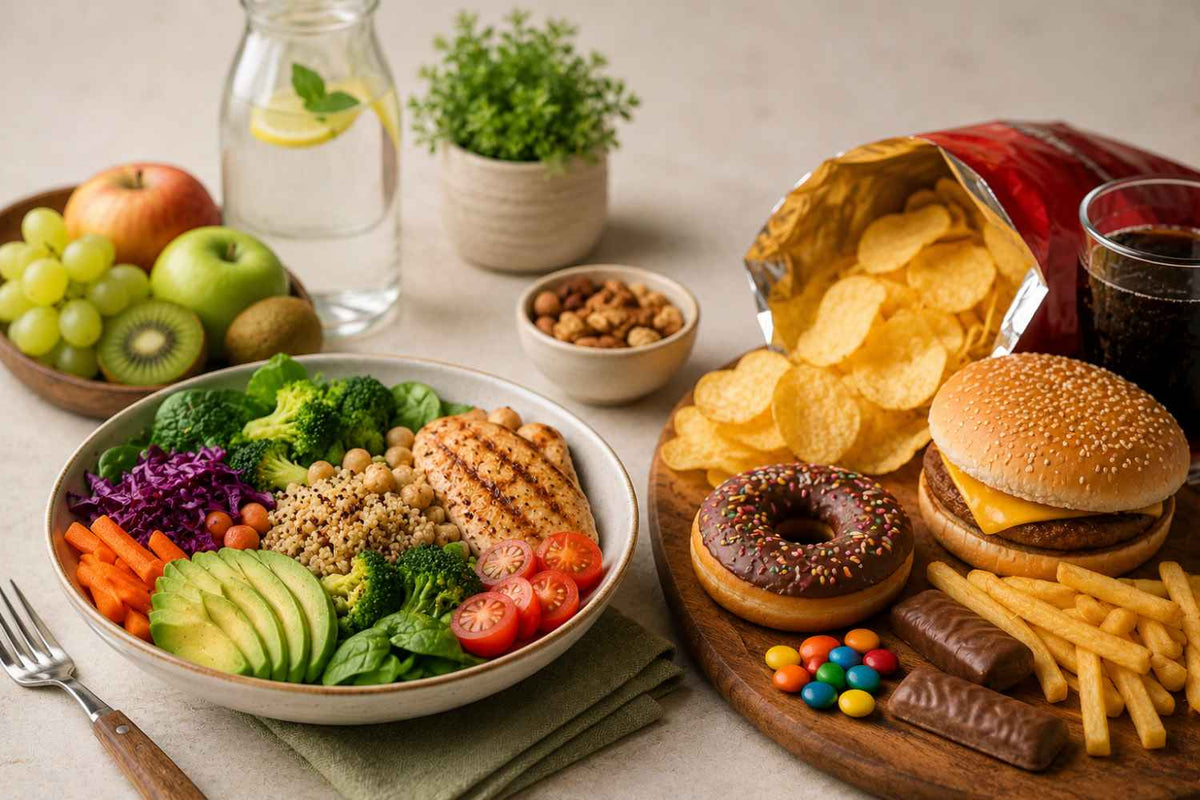
Step inside any grocery store, and you will see rows and rows of vibrant packets of food, all claiming to be healthy, tasty, and with longer shelf life. While many processed foods are capable of being incorporated into a healthy meal plan, the prevalence of ultra-processed foods in our diet has grown to an extent we don't quite realize.
These include breakfast cereals, packaged desserts, instant noodles, energy drinks, flavored snacks, and many other convenient and palatable types of products. Nevertheless, recent studies show that frequent consumption of ultra-processed foods might negatively affect one's health.
It turns out that improving your diet does not require radical changes in your kitchen and the complete abandonment of favorite foods. Actually, some simple changes like substituting a few ultra-processed foods with healthier ones can make a difference over time.
This blog post aims to introduce ultra-processed foods, explain the differences between ultra-processed and other processed foods, as well as the changes that you are likely to feel after giving up some of the ultra-processed foods.
What Are Ultra-Processed Foods?
Not all processed foods are unhealthy. Processing simply means that a food has been altered from its original form. Washing vegetables, roasting nuts, grinding oats into flour or pasteurising milk are all examples of food processing.
Ultra-processed foods, however, are different. According to the NOVA food classification system, ultra-processed foods are industrial formulations made mostly from refined ingredients, additives and substances extracted from foods rather than whole ingredients themselves. They often contain ingredients that you wouldn't normally use in a home kitchen, such as artificial flavours, colours, emulsifiers, preservatives and flavour enhancers.
These foods are usually designed to be convenient, highly palatable and have a long shelf life.
Common Examples Of Ultra-Processed Foods
Some common examples include:
- Sugary breakfast cereals
- Flavoured chips
- Instant noodles
- Soft drinks and energy drinks
- Packaged pastries
- Candy and confectionery
- Sweetened breakfast bars
- Processed meat products
- Flavoured instant soups
- Frozen ready meals
This doesn't mean you can never enjoy these foods. The key is understanding how often they appear in your diet and choosing more minimally processed foods whenever possible.
Why Are Ultra-Processed Foods Getting So Much Attention?
Over the past decade, researchers have become increasingly interested in studying the health effects of diets high in ultra-processed foods.
One reason is that these foods often contain higher amounts of added sugar, refined starches, unhealthy fats and sodium while providing less fibre and fewer naturally occurring nutrients than whole or minimally processed foods.
They're also easy to overeat because they're designed to taste rewarding and require very little preparation. Combined with busy lifestyles, this can make ultra-processed foods a regular part of everyday meals rather than an occasional convenience.
Fortunately, reducing your intake doesn't have to happen overnight. Even replacing one or two foods a day with more wholesome alternatives can be a positive first step.
10 Things That May Happen When You Reduce Ultra-Processed Foods
1. You May Feel More Energised Throughout The Day
One of the first changes many people notice is more consistent energy.
Ultra-processed foods are often high in refined carbohydrates and added sugars, which can cause rapid spikes and drops in blood sugar. These fluctuations may leave you feeling tired, sluggish or reaching for another snack soon after eating.
Choosing meals that include protein, fibre and healthy fats instead can help provide steadier energy throughout the day and keep you feeling satisfied for longer.
2. You May Experience Better Digestion
One of the biggest benefits of reducing ultra-processed foods is improved digestive health.
Many ultra-processed foods are low in dietary fibre, an essential nutrient that supports healthy digestion and regular bowel movements. At the same time, they often contain refined ingredients and additives that don't provide the same nutritional value as whole foods.
When you begin replacing some of these foods with meals that include vegetables, fruits, whole grains, legumes and nuts, your fibre intake naturally increases. Fibre helps move food through the digestive tract, supports gut health and may reduce common digestive complaints such as constipation and bloating.
Keep in mind that if you're significantly increasing your fibre intake, do it gradually and drink plenty of water to help your digestive system adjust comfortably.
3. You May Feel Fuller For Longer
Have you ever eaten a packet of chips and ended up feeling hungry just an hour later?
It is not unusual for ultra-processed foods to be engineered to be easily eaten in minutes but may not always be able to sustain your feeling of satiety.
Unprocessed foods that have a balanced composition of proteins, fibre and healthy fats digest much slower compared to ultra-processed foods, thus keeping you fuller for a longer period of time.
For instance, a wholesome meal including oats, nuts, fruits and some other components will definitely leave you feeling much fuller than any pastry would. Moreover, snacks containing nuts, seeds and grains usually ensure better satiety than their processed counterparts.
Being full for longer can help in reducing snacking during the day.
4. Your Cravings May Become Easier To Manage
A large number of ultra-processed products are deliberately created to elicit the desire for repeated consumption. Due to the fact that such products contain sugar, refined carbohydrates, salts, and fats, they are very attractive and, in some cases, you can want more even right after their consumption.
Reducing your portion sizes does not immediately eliminate all the cravings; however, in time, many people experience a change of taste in favour of the taste of unprocessed products.
Instead of craving sweets and salty snacks, you will begin to appreciate the taste of fruits, nuts, or home-cooked meals.
5. You May Notice More Stable Energy Levels
If your diet consists primarily of snacks that are high in sugar and processed foods, then you will often feel energy surges and after that feel lethargic.
Eating meals that are balanced, rather than snacks, can be helpful for gaining more energy throughout the day.
Instead of drinking coffee and taking in some sugary snacks to make it through the day, meals that include protein, fiber and fat will help with the slow release of energy.
People also find it easy to concentrate and be productive if they eat balanced meals.
6. You May Start Appreciating Simpler Flavours
Ultra-processed foods tend to be laden with flavourings and additives meant to enhance the taste sensation.
As you slowly cut back on them, your taste buds will start to change.
Those items which used to be bland – say, roasted veggies, fruits, oats, or nuts – usually start tasting better because you learn to enjoy their taste.
It takes some time for that to happen but the end result is very satisfying.
7. You May Be Eating More Nutrient-Dense Foods
Cutting down on highly processed food automatically leaves space for more nutritious food choices.
Consider swapping:
- Sugar-filled cereals with oats.
- Carbonated beverages with water or sugar-free drinks.
- Sweet treats with fruits and yoghurt.
- Highly processed snack foods with nuts and roasted chickpeas.
Such simple exchanges not only lower your consumption of ultra-processed foods but also improve the nutritional value of your diet.
Instead of thinking about what you are giving up, think about the nutritious foods that you are adding.
8. Supporting Long-Term Health
It is proven that ultra-processed foods in large amounts increase the chances of developing a number of diseases such as obesity, type 2 diabetes, and heart diseases. Though no single food item dictates your health, your dietary pattern does play a role.
Eliminating ultra-processed foods and incorporating minimally processed foods into your diet will go a long way in improving the overall quality of your diet. In addition, regular exercise, sleep, and stress reduction are vital for good health.
What we strive to achieve is not to remove every processed food from our diet but to establish a pattern in which minimally processed foods dominate our meals.
Simple Ways To Reduce Ultra-Processed Foods Without Feeling Restricted
Making healthier choices doesn't have to happen overnight. In fact, small, sustainable changes to a better diet does not have to occur all at once. These steps tend to be more realistic than a full-scale transformation of your diet.
Consider the following tips:
- Check the list of ingredients before purchasing processed products.
- Select snacks that have recognizable and healthy ingredients.
- Have a protein and fibre source in each of your meals.
- Make sure you cook meals from home as often as possible.
- Ensure you have healthy snacks available to avoid impulse buys.
Make gradual changes to your diet by changing an ultra-processed product one by one. Remember, it is about balance, not perfection and eating healthily should not mean sticking to strict rules but forming habits.
If you are looking for healthy and tasty gluten-free snacks, then you are in the right place. Cinnamon Kitchen, a gluten free bakery is known for one of the biggest gluten-free facilities in the country, offering snacks and desserts containing no refined sugar, artificial additives, or preservatives.
Choosing Better Ingredients With The Cinnamon Kitchen
Cutting back on ultra-processed foods does not have to mean sacrificing convenience or an indulgence now and again. It simply means being more intentional about the quality of the ingredients that go into the food you consume daily. At The Cinnamon Kitchen, we know how important wholesome ingredients are; that is why our product line is carefully designed with ingredients such as nuts, millets, oats, seeds, and dark chocolate without any artificial preservatives or additives.
Whichever product you choose between our Almond Flour & Cacao Cookies,Berry & Banana Millet Granola, Cacao Hazelnut & Date Fudge, and Cacao Almond Butter, we are confident that you will be making better food choices for yourself. Our products are made in a 100% gluten-free environment and contain no refined sugar.
Conclusion
Eating less ultra-processed foods is not about striving for perfection when it comes to the diet or cutting out every type of packaged food you own. It is about becoming more conscious of what you eat, little by little. By choosing to eat foods that contain fewer ingredients, focusing on whole foods, and creating balanced meals that consist of proteins, fibers, and good fats, you might start seeing improvements in how you feel.
Frequently Asked Questions
1. Are All Packaged Foods Considered Ultra-Processed?
No. Ultra-processing is not applied to all packaged food items. Many minimally processed foods like oats, frozen vegetables, nuts that have not been salted, or natural nut butter could be healthy elements of your diet. What is crucial here is to get rid of any illusions you might have because of the package and take a closer look at the list of ingredients.
2. How Long Does It Take To Notice Changes After Reducing Ultra-Processed Foods?
Experience is unique, but some people report feeling energized, experiencing better digestive processes, and being more satiated in a few days or weeks after they have made changes in their diet consistently. Your success will depend on your eating habits as a whole and your overall health and lifestyle.
3. Is It Okay To Eat Ultra-Processed Foods Occasionally?
Yes. Good nutrition relies on the overall dietary habits of a person rather than on one food intake. Even if you consume ultra-processed foods once in a while, it doesn't mean you failed and you need to go back to square one. The idea is to eat whole foods most of the time.
4. Where Can I Find Snacks Made With Simpler Ingredients?
For those searching for snacks prepared from well-selected healthy ingredients, select brands that emphasize good ingredients over additives. The Cinnamon Kitchen has gluten free snacks such as cookies, granolas, nut butters, crackers, and desserts all made from healthier ingredients. This makes it easy to snack every day without having to sacrifice on the flavor.
Popular Searches
Natural Almond Butter | Jim Jam Biscuit | Walnut Brownie | Gluten Free Snacks | Sugar Free Cookies | Sugar Free Cake
Popular Blogs
Types Of Millets | Gluten Free Foods | Muesli Vs Granola | Pre Workout Snacks | Diabetic Dessert Recipes | Is Granola Healthy | Almond Butter Vs Peanut Butter | Sattvic Foods
