


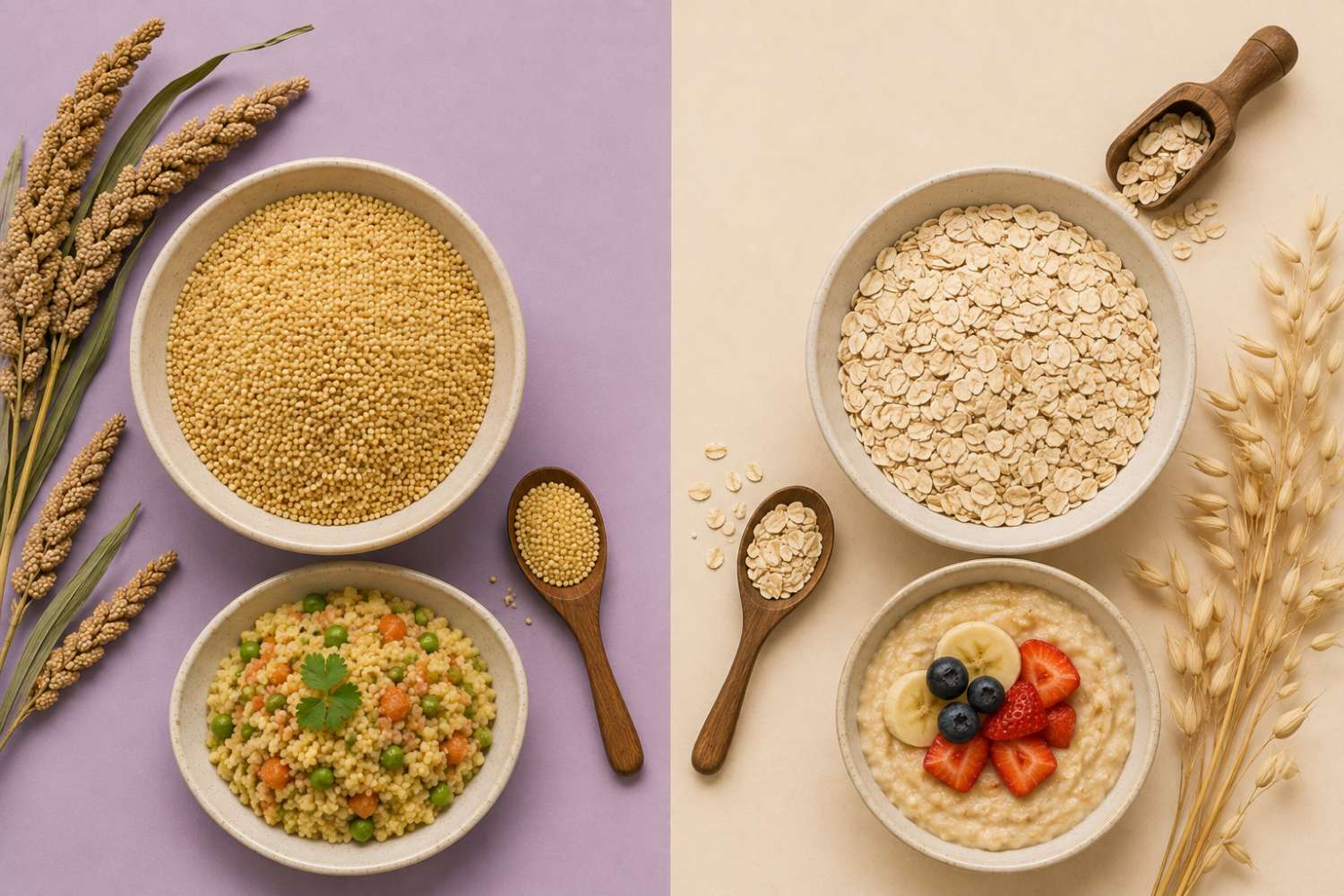
Healthy dieting has led to the increased consumption of healthy grains as millets and oats have become popular choices for many people who aim at maintaining a balanced diet. These are two healthy grain foods which are rich in various nutrients such as fiber, important vitamins, minerals, and antioxidants that play a key role in ensuring general health and wellness. Depending on what one aims at achieving through his or her diet, either oat or millet can be selected. Though oats are popularly known for the presence of cholesterol reducing fiber, millets are noted for their high mineral content and natural gluten-free status.
What Are Millets?
These are small-seeded varieties of ancient grains that have been cultivated for a long time and that have a great nutritional value. These grains are naturally free from gluten and are very rich in proteins, fibers, vitamins, and vital minerals, and thus make for a great substitute for refined grains. Some common types of millets include:
- Foxtail millet
- Pearl millet (bajra)
- FInger millet (ragi)
- Little millet
- Barnyard millet
These offer different health benefits to the consumer. Millets have gained popularity due to the increasing need for nutritious and sustainable foods. Being rich in fibers, millets help in digestion and give one a feeling of fullness. Minerals such as iron, magnesium, calcium, and phosphorus found in them promote bone strength and energy production.
What Are Oats?
Oats are whole grain cereals that come from the Avena sativa plant and are known for their good nutritional content. Oats are consumed for breakfast due to their satisfying properties, ease of preparation, and benefits for health. There are different types of oats, such as steel cut oats that are not as heavily processed and possess a chewier texture; rolled oatsthat have been steamed and rolled flat; andinstant oats that are precooked and therefore cook the fastest. Even though processing influences the texture and time required to cook them, all kinds of oats preserve most of their nutrient content. The high nutritional value of oats is attributed to the high amount of soluble fiber beta-glucan that reduces the levels of cholesterol in blood, positively influences heart health, enhances digestion, and regulates blood sugar.
Millets vs Oats: Nutritional Comparison
Between millets and oats, both are great providers of fiber, vitamins, and minerals. However, there exist some differences in their nutritional values as well. The thing is that millets usually contain higher amounts of minerals such as iron and calcium (ragi especially). Meanwhile, oats have more protein in them.
|
NUTRIENT (per 100g) |
MILLETS |
OATS |
|
Calories |
Moderate |
Moderate |
|
Protein |
Moderate |
Higher |
|
Dietary Fiber |
High |
High |
|
Iron |
Higher (varies by millet) |
Moderate |
|
Calcium |
Very high in ragi |
Low |
|
Magnesium |
High |
High |
|
Gluten |
Naturally gluten free |
Naturally gluten free |
|
Glycemic Index |
Generally lower |
Moderate |
|
Antioxidants |
Good |
Good |
Key Takeaways
- Both are nutritious whole grains, packed with fiber and other important nutrients.
- Millets are better when it comes to minerals such as iron and calcium.
- The oats contain higher amounts of protein and beta-glucan, which is a soluble fiber.
Millet or Oat: Which Is Better for Losing Weight?
Both oats and millets can help lose weight because they keep you full for long periods and stop unnecessary snacking. However, what is better depends on your diet and preferences.
Millet
- It usually has a low glycemic index that prevents blood sugar from rising quickly.
- Its high content of fiber makes one feel full and supports proper digestion.
- It gives the body energy and can help manage hunger through the day.
Oats
It is famous for its high satiety.
Oats have high amounts of soluble fiber (beta-glucan) that slow down digestion.
This is the best grain to start your day with because you can add different fruits, nuts, and seeds.
Conclusion
Both millet and oats can help with losing weight when eaten in reasonable amounts and with a healthy diet and exercise routine.
Which is More Suitable for Diabetics: Millets or Oats?
Both millets and oats are considered to be good options for people with diabetes because of their high fiber content and the presence of slowly digestible carbohydrates. However, millets have a lower glycemic index as compared to oats; therefore, they help in stabilizing blood sugar levels. Moreover, oats consist of beta-glucan which is a soluble fiber.
Millets vs Oats for Diabetes
Glycemic Index
Millets: Low glycemic index, results in slower elevation of blood sugar.
Oats: Moderately low glycemic index, but still a healthy whole-grain option.
Glucose Release Rate
Millets: Lead to a gradual release of glucose.
Oats: Induce moderate changes in glucose release rate due to high amount of carbohydrates.
Fiber Content
Millets: Rich in dietary fibers, contributing to effective regulation of blood glucose.
Oats: Rich in dietary fibers as well; **oat beta-glucan** delays glucose absorption.
Most Suitable For
Millets: Good option for managing blood glucose level throughout the day.
Oats: Excellent breakfast meal due to high fiber content.
Remark: No matter which of these grains you choose, serving size, cooking methods, and the whole diet play an important role in maintaining blood sugar levels. Combining these grains with other foods, such as proteins and healthy fats, will be helpful for the purpose.
Comparison of Millets and Oats for Health Purposes: What to Choose?
|
GOAL |
BETTER CHOICE |
|
Weight loss |
Both |
|
Diabetes management |
Millets |
|
Heart health |
Oats |
|
Bone health |
Millets |
|
High protein breakfast |
Oats |
|
Gluten free diet |
Millets |
|
Daily nutrition |
Both |
Healthy Snacking with The Cinnamon Kitchen
While it is important to select good grains for consumption in your meal preparation, one needs to make healthier snack selections on a daily basis. The Cinnamon Kitchen, a bakery website focused on wholesome snacking, promotes healthy snacking by manufacturing clean-label products with selected healthy ingredients. Free from any preservative agents, our snacks provide the best combination of deliciousness and health benefits.
For those who want to consume more millets and oats, here are some tasty options provided by The Cinnamon Kitchen:
Millet-Based Snacks
- Amaranth & Cacao Millet Cake – Moist and wholesome cake made of millets and amaranth combined with rich cacao flavor.
- Crispy Millet Pita – Crispy and baked millet-based bites for that perfect snack time.
- Gluten Free Millet Bread – Soft and nutritious bread made from millet flour.
Oat- Based Snacks
- Berry Cacao Oat Cookies – Healthy cookies packed with oats, cacao, cranberries, and jaggery to create an inherently delicious snack.
- Oat Fig & Almond Granola – A healthy combination of oats, almonds, and figs ideal for consumption at breakfast, yogurt toppings, or as a tasty snack at any time during the day.
- Apple & Blueberry Crumble Cake – A healthy cake that includes the goodness of oats, sweet apples, and blueberries to offer a wholesome snack or dessert.
No matter what kind of snacks you are looking for whether it be gluten-free, millets, or oat, The Cinnamon Kitchen offers an easy, healthy snacking experience without compromising on the taste of the products.
Conclusion
In the case of comparing millets and oats, neither has an advantage over the other since they are equally healthy grains with their respective properties. On one hand, millets contain more minerals, are gluten-free, and are relatively low on the glycemic index, while oats offer higher protein content and beta-glucan fiber to promote cardiac and appetite health. Instead of opting for one grain type at the expense of the other, consuming both on a weekly basis will ensure that you take up an even wider array of nutrients and benefits.
FAQs:
1. Can I substitute rice or wheat with millets or oats?
Yes. These are equally healthy grains which can be substituted with refined grains in dishes like porridge, roti, khichdi or baking recipes.
2. Which is the healthiest millet?
Depends upon your requirement. Ragi is an excellent source of calcium, bajra contains a lot of iron, and then there is foxtail millet which is a great source of fiber.
3. Can children and senior citizens consume millets and oats?
Yes. Both are healthy food items which can be easily consumed by them when prepared in digestible form.
4. How do I store millets and oats?
They can be stored in sealed containers in cool places.
5. Can I combine millets and oats in my recipes?
Yes. They can be combined in porridge, pancakes and even in snack bars and other nutritional recipes.
Popular Searches
Natural Almond Butter | Jim Jam Biscuit | Walnut Brownie | Gluten Free Snacks | Sugar Free Cookies | Sugar Free Cake |
Popular Blogs
Types Of Millets | Gluten Free Foods | Muesli Vs Granola | Pre Workout Snacks | Diabetic Dessert Recipes | Is Granola Healthy | Almond Butter Vs Peanut Butter | Sattvic Foods
