


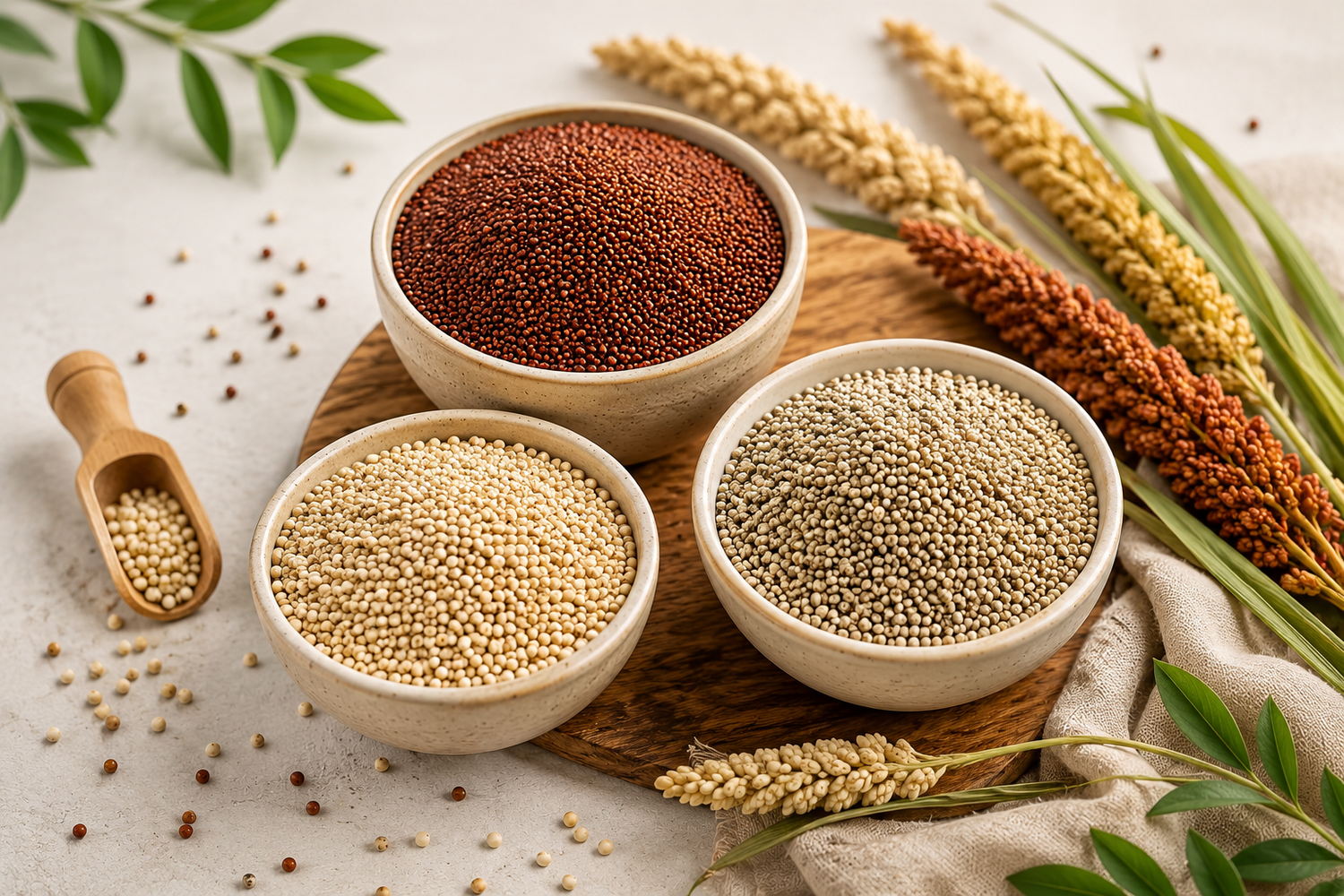
Long before nutrition labels and supplement aisles, Indian kitchens already knew what these three grains were worth. Bajra kept Rajasthan warm through winter. Jowar did a fabulous job of feeding the Deccan plains through generations of farming families. And ragi nourished the hills of the South, one porridge bowl at a time. These were not health trends, but what our grandmother cooked because the land provided them and their families thrived on them.
This was before polished rice and maida(refined flour) took over our plates. Now, in a full circle movement, millets are back on the menus and in kitchen shelves.So, the natural next question is,jowar vs. bajra vs. ragi, which one is actually the healthiest? Well, there is no single winner. Each grain has its own strengths, and understanding them categorically can help you eat with more intention.
In This Article
What Are Ragi, Jowar, and Bajra?
Nutritional Comparison: Ragi vs Jowar vs Bajra
Health Benefits of Pearl Millet (Bajra)
Ragi vs Jowar vs Bajra for Weight Loss
Ragi vs Jowar vs Bajra for Diabetes
Ragi vs Jowar vs Bajra for Protein
Ragi vs Jowar vs Bajra for Bone Health
Which Millet Is Best for Digestion?
How to Include Ragi, Jowar, and Bajra in Your Diet
Ragi vs Jowar vs Bajra: Which Millet Wins?
Key Takeaways
- Ragi has by far the highest calcium of the three, making it the best pick for bone health.
- Jowar Vs Bajra for a lighter meal usually favours jowar, due to its higher fibre and gentler impact on blood sugar.
- Bajra Vs Ragi for iron: Bajra is favoured, which also keeps you fuller for longer through winter.
- Ragi vs Jowar for weight loss depends on portion and preparation. Both work well when eaten mindfully.
What Are Ragi, Jowar, and Bajra?
What is Ragi (Finger Millet)?
Ragi is a small reddish-brown grain that is ground into flour for porridge and dosas. It is well known for its high calcium content.
What is Jowar (Sorghum)?
Jowar is a pale and mild-tasting millet. It is gluten-free and easy to make into rotis and upma without overpowering your meal.
What is Bajra (Pearl Millet)?
Bajra is an earthy and hearty grain that is traditionally eaten in winter for its warming and energy-dense character.
Nutritional Comparison: Ragi vs Jowar vs Bajra
Here are the approximate values per 100 grams of raw grain. Bajra, jowar, and ragi nutritional value can vary according to variety and processing. Therefore, it's best to treat these as a general guide and not exact figures.
|
Nutrient |
Ragi |
Jowar |
Bajra |
|
Calories |
~336 kcal |
~349 kcal |
~361 kcal |
|
Protein |
~7.3 g |
~10.4 g |
~11.6 g |
|
Fibre |
~3.6 g |
~6.3 g |
~1.2 g |
|
Calcium |
~344 mg |
~25 mg |
~42 mg |
|
Iron |
~3.9 mg |
~4.1 mg |
~8 mg |
|
Carbohydrates |
~72 g |
~72 g |
~67 g |
Ragi Millet Health Benefits
In the Bajra Jowar Ragi nutrition story, ragi earns a permanent place in your kitchen for its calcium content. It is:
- High in calcium and may help to support bone health.
- Rich in fibre and filling, which may help in weight management.
- Its fibre can help lower blood sugar levels.
- Naturally gluten-free and usually easy to digest.
Jowar Health Benefits
In the jowar vs bajra vs ragi debate, jowar quietly sits pretty as a fiber rich and gut friendly option. It is:
- Full of dietary fibre for daily digestion.
- May promote heart health as part of a balanced diet.
- Has plant compounds with antioxidant properties.
- Its complex carbohydrates help sustain energy during the day.
Health Benefits of Pearl Millet (Bajra)
When it comes to iron and energy, bajra vs ragi is no contest. Bajra is a clear winner. It is a:
- Good source of iron, handy when tired or iron deficiency is an issue.
- Rich in natural fibre, which aids digestion.
- Tends to keep you satiated longer.
- May support blood sugar management as part of a well-rounded meal.
Ragi vs Jowar vs Bajra for Weight Loss
Jowar has a higher fibre content that helps with satiety, whereas ragi’s density keeps hunger at bay. Bajra can also support weight management when eaten in appropriate portions. When watching your calories, it’s not usually the grain that’s the problem but how you prepare and pair it.
Ragi vs Jowar vs Bajra for Diabetes
Jowar has a relatively low glycemic index. The fiber in ragi also helps slow down sugar absorption. Bajra also has a relatively low glycemic index, which can help manage diabetes. All three can fit on a diabetes-friendly plate; however, portion size and food pairing are very important.
Ragi vs Jowar vs Bajra for Protein
Bajra has the highest protein content, followed by jowar, with ragi containing the least. Any of the three, when paired with dals or legumes, makes the amino acid profile more complete and wholesome nutritionally.
Ragi vs Jowar vs Bajra for Bone Health
When comparing Ragi vs. jowar for calcium, ragi wins. It’s also a good choice for growing children and older adults who need more calcium.
Which Millet Is Best for Digestion?
Jowar's fiber content makes it gentle on digestion for most people. Bajra and ragi can also support gut health, especially when introduced gradually into your diet.
How to Include Ragi, Jowar, and Bajra in Your Diet
Here are a few healthy ways in which you can incorporate ragi, jowar, and bajra in your diet:
Ragi can be enjoyed as porridge or made into laddus. Jowar can be included in your meals as roti, upma, or khichdi, and bajra is a versatile grain that can be enjoyed as winter roti, khichdi, or even a roasted snack.
The Cinnamon Kitchen makes it effortless for you to include millet-based options in your daily diet. You can check out their gluten free bread and millet-based granola. It is a treat that fits a mindful plate. While you're at it, you can also browse through their keto cake and explore a wide range of gluten free snacks.

Ragi vs Jowar vs Bajra: Which Millet Wins?
Comparing the nutritional value of ragi, jowar and bajra in detail will not help you declare a winner. There’s only the right grain for the right purpose. Of the three, ragi, jowar and bajra, Bajra stands out for its protein and iron content. Calcium supports Ragi; fiber supports Jowar. So if you are wondering which millet is better - ragi, jowar, or bajra for daily consumption- the best choice may simply be to rotate all three throughout the week, the way Indian kitchens have always intended them to be!
And if you’re willing to do that, The Cinnamon Kitchen has some fabulous options you can add to your daily routine.
Frequently Asked Questions
Which is the healthiest millet? Bajra, Jowar or Ragi?
No single food is the healthiest for everyone. Ragi for Calcium, Jowar for light digestion, Bajra for Iron and Energy. The best thing to do is to rotate all three.
What is the millet with the lowest glycemic index?
Bajra and jowar are often considered to have a relatively lower glycemic impact than many refined grains, but individual responses may vary.
Is jowar better than bajra for diabetes?
Both can be part of a diabetes-friendly diet in the right portions. Often the better choice is the one that agrees with your digestion and taste.
Is Ragi recommended for blood sugar control?
Ragi is rich in dietary fiber, minerals such as calcium, iron, and magnesium, and complex carbohydrates. These nutrients help in slowing down the absorption of sugar into the bloodstream, thereby preventing spikes in blood glucose levels. Moreover, ragi has a low glycemic index, which means it doesn't raise blood sugar levels quickly. This makes it an excellent food for controlling blood sugar, especially for those with diabetes or prediabetes.
Can I eat ragi every day?
Yes, in moderate portions as part of a varied diet. If you have a specific health condition or allergy, check with a doctor or nutritionist first.
Popular Searches
Wedding Hampers for Guests | Diabetic Friendly Snacks | Badam Butter | Gluten Free Cookies | Jim Jam Biscuit
Popular Blogs
Biscuits for Diabetics | Which Dark Chocolate is Best for PCOS | Does Atta have Gluten | Is Granola Healthy
