


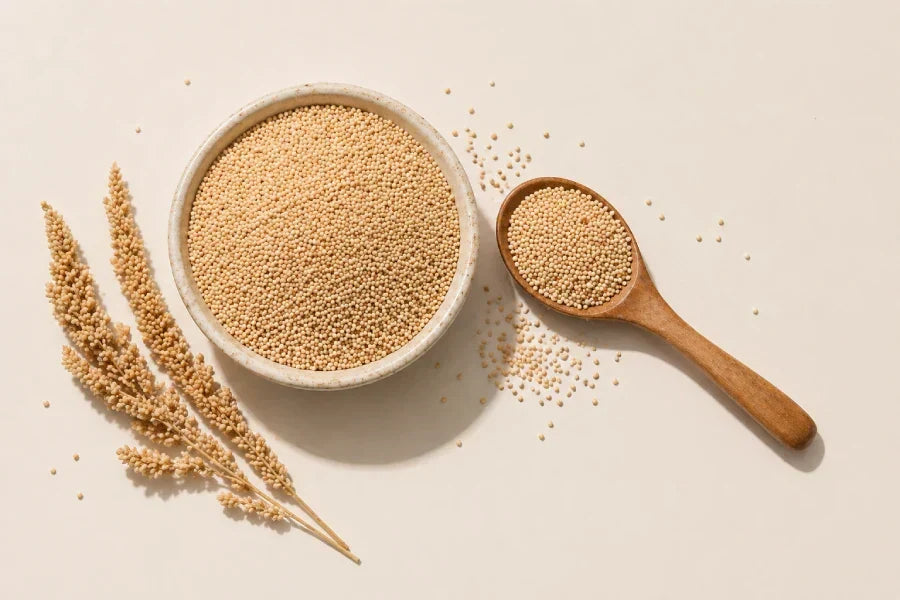
From celebrities like Anushka Sharma to health coaches, everyone swears by the amaranth nutrition and benefits. But can you add amaranth to your daily diet without compromising on taste? That’s exactly what we will find out in this blog.
From amaranth benefits and uses to some amazing amaranth recipes, this blog will cover everything you need to know about amaranth as food.
Quick Overview
Amaranth, also known as rajgira in India, is a naturally gluten-free pseudo-grain rich in protein, fibre, iron, magnesium, and other essential nutrients. It can be enjoyed as seeds, flour, or popped grains and is commonly used in rotis, porridge, snacks, and baked foods.
What is Amaranth (Rajgira)
Amaranth, known as rajgira in India, is a nutrient-rich pseudo-grain that has been used in Indian cooking for centuries. Although many people refer to it as amaranth millet, it is technically a pseudo-grain rather than a true millet.
Amaranth (rajgira) is naturally gluten free and contains more protein than many commonly consumed grains such as rice, making it a preferred choice for health-conscious diets.
In Indian households, amaranth/rajgira is used in the form of seeds, flour, or popped grains.
Is amaranth and rajgira the same?
Yes. Amaranth is the English name, while rajgira is the commonly used Hindi name. In different parts of India, it may also be called ramdana or chaulai, but they refer to the same grain.
What is Rajgira Called in English?
Rajgira is called amaranth in English. Depending on the region in India, it may also be known as ramdana or chaulai, but all refer to the same nutritious pseudo-grain.
Types of Amaranth in India
In India, amaranth food is mainly available in two forms:
Amaranth seeds (rajgira seeds): These are the small, light coloured grains used for cooking or popping.
Amaranth flour (rajgira atta): Ground form used to make rotis, laddoos, and snacks.
You might also hear people call it amaranth millet, even though it is technically not a millet but functions similarly in recipes.
Nutritional Value of Amaranth
Amaranth is naturally rich in protein, dietary fibre, iron, magnesium, phosphorus, and other essential nutrients that support a balanced diet.
|
Nutrient |
Amount (per 240-250 g cooked) |
|
Calories |
~271 kcal |
|
Protein |
~9.5 g |
|
Carbohydrates |
~46 g |
|
Dietary Fibre |
~6.7 g |
|
Fats |
~5 g |
|
Iron |
29% of the RDI |
|
Magnesium |
40% of the RDI |
|
Phosphorus |
36% of the RDI |
|
Potassium |
~508 mg |
|
Vitamin C |
~4.2 mg |
Rajgira nutritional value at a glance
Cooked amaranth provides protein, dietary fibre, iron, magnesium, phosphorus, and potassium, making it one of the more nutrient-dense grains commonly eaten in India.
Rajgira protein content
One cup of cooked amaranth contains approximately 9 to 10 grams of protein, making it a good plant-based protein source for vegetarian diets.
Amazing Health Benefits Of Amaranth (Rajgira)
Check out the amazing health rajgira benefits for you:
1. High Protein Content
One of the biggest amaranth grain benefits is its protein content. It contains all essential amino acids, making it especially useful for vegetarians.
2. Benefits of Amaranth Flour
Many of the advantages of using amaranth flour in rotis, pancakes, or baked foods also apply since it preserves many of the nutrients included in the grain.
3. Supports Digestion
Amaranth is high in fiber, which helps improve digestion and keeps your gut healthy.
4. Helps in Weight Loss
Since amaranth is filling and nutrient-dense, it can help control hunger and reduce unnecessary snacking.
5. Promotes Bone Health
It contains calcium and magnesium, which are essential for maintaining strong bones.
6. Low in Calories
Amaranth's high nutritional content and low calorie content make it a good addition to balanced diets.
7. Beneficial to Anaemia Patients
Because of its iron content, people with low haemoglobin levels may benefit from it.
8. Gluten Free by Nature
Amaranth's complete lack of gluten makes it ideal for people who are gluten intolerant or following a gluten-free diet, which is one of its biggest benefits.
Methods for Including Amaranth in Your Diet
1. Rajgira roti
One of the easiest ways to incorporate amaranth into regular meals is to make rajgira roti. It is made in the same manner as ordinary wheat roti, however it has more protein and is gluten-free.
Like any other roti, you can incorporate it into your meal.
2. Cookies
Typically, amaranth flour is combined with nut flours, natural sweeteners like dates or jaggery, and healthy fats like coconut oil to make these.
The end product is pleasant, healthy cookies without the typical overabundance of pure sugar. They go nicely with tea or coffee or as a midday snack.
They keep you fuller for longer and prevent needless snacking because they are higher in nutrients.
3. Porridge
Just like wheat daliya, you can use amaranth to make a healthy breakfast porridge. The grains are cooked in water or milk until soft and slightly creamy, similar to oats.
You can keep it savoury with a pinch of salt and spices or make it sweet with fruits, nuts, and a natural sweetener.
4. Sweet Rajgira Ladoo
You must have tried rajgira ladoo during Janmashtami. These are a popular delicacy in northern India.
You can add a healthy twist to these amaranth ladoos by replacing refined sugar with jaggery or date paste. The combination of iron-rich amaranth and mineral-rich jaggery makes them a better alternative to regular sweets.
How to Choose and Store Amaranth
When purchasing amaranth, aim for pure, dry grains free of contaminants or moisture. Make sure the flour you buy is fresh and odor-free.
For keeping:
- Store it in an airtight container.
- Keep in a dry, cool location.
- To extend the shelf life of flour, refrigerate it.
- Its freshness and nutritional content can be preserved with proper preservation.
For a simple way to incorporate it into your diet, you may also purchase Amaranth & Cacao Millet Cake from The Cinnamon Kitchen.
Amaranth Seeds vs Amaranth Flour
Amaranth seeds can be cooked like grains or popped for snacks, while amaranth flour is commonly used for rotis, cookies, and baking. Both provide similar nutritional benefits, making it easy to include rajgira in different recipes.
Conclusion
Amaranth, or rajgira, is one of the modern superfoods that fits perfectly with today’s health-conscious lifestyles. It is worth adding to your daily diet because it is naturally gluten-free and provides protein, fibre, iron, and other essential nutrients.
Amaranth food is an easy way to make your meals more nutritious without complicating your routine, whether you enjoy it as rotis, snacks, or sweets. If you are gluten-sensitive, amaranth is one of the most reliable grains you can add to your daily diet. The Cinnamon Kitchen offers a delicious variety of amaranth-based snacks for everyday eating.
Nutritional Note
The nutritional values shared in this article are approximate and may vary depending on the variety of amaranth and the cooking method. If you have specific dietary requirements or a medical condition, consult a qualified healthcare professional or registered dietitian.
FAQs
1. Can rajgira be eaten every day?
Yes, Rajgira is light, nutritious, and protein-rich, so you can have it every day.
2. What is amaranth called in India?
Amaranth is known by numerous names in India, such as "rajgira," "ramdana," "chuka," and others. Different regions know it by different names.
3. Is amaranth flour gluten-free?
Yes, Amaranth flour is naturally gluten-free and can be added to your gluten-free diet.
4. Can amaranth flour be used for baking?
Yes, amaranth flour can be used for baking cakes, cookies, and more. The Cinnamon Kitchen offers Amaranth cacao cake that is moist, tasty, and fully gluten-free.
5. How do you eat amaranth seeds?
You can eat amaranth seeds as porridge, cereal, or just pop them like popcorn and eat as a snack.
Popular Searches
Wedding Hampers for Guests | Diabetic Friendly Snacks | Badam Butter | Gluten Free Cookies | Jim Jam Biscuit
Popular Blogs
Biscuits for Diabetics | Which Dark Chocolate is Best for PCOS | Does Atta have Gluten | Is Granola Healthy
