


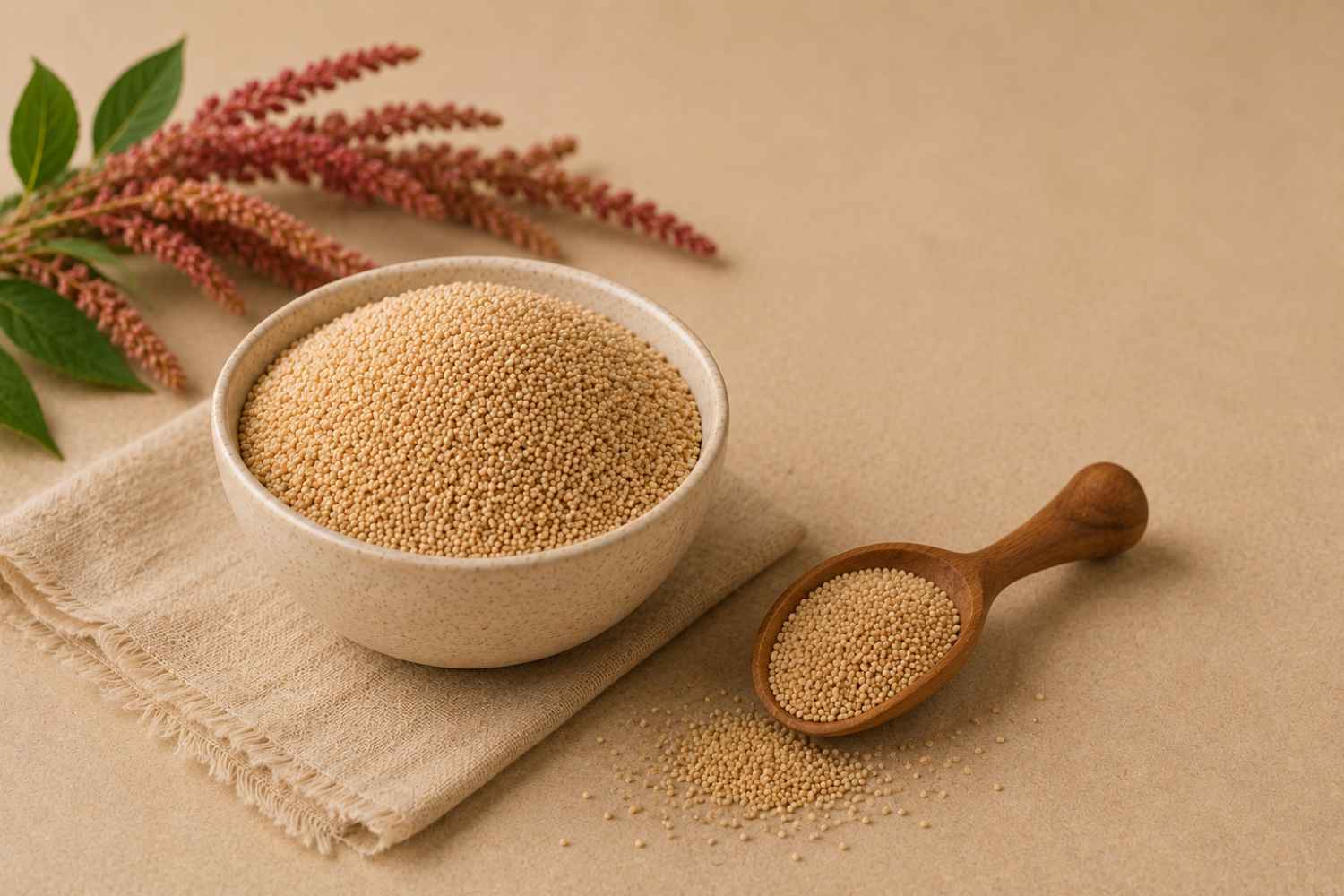
Foods tend to come in and out of trend fashion every few years. One year, quinoa will be on trend. Next year, chia seeds will dominate, followed by oats and millets.
Every now and then, there comes an ingredient that does not fall victim to trends. It is simply timeless and it has been great for several centuries.
One such ingredient is amaranth.
In India, amaranth is widely known as rajgira and has been a part of Indian traditional cuisine for ages, especially in times of fasts. However, amaranth still lacks the attention it truly deserves.
That’s the reason to make gluten-free snacks we selected amaranth at The Cinnamon Kitchen, not for its trendiness.
What Exactly Is Amaranth?
Even though it is often called a grain, it is important to mention that it is a pseudocereal along with quinoa and buckwheat.
That is to say that it is not considered to be a cereal grain; however, it is used in the same way as most other grains. For many centuries, this tiny seed has been cultivated and does not contain any gluten. Moreover, it has the nutritional value that makes it a perfect addition to your everyday meals.
Why is it better than others? Because you do not have to change anything about your diet.
Every Ingredient Has to Earn Its Place
At The Cinnamon Kitchen, we don't add ingredients because they're fashionable.
Every ingredient has to answer one simple question:
Does it genuinely make the food better?
Sometimes that's about flavour.
Sometimes it's about texture.
Sometimes it's about nutrition.
And occasionally, it's all three.
Amaranth checked every box.
It has a naturally mild, nutty flavour that complements chocolate beautifully. It creates a wonderfully soft crumb in baked goods and works brilliantly alongside ingredients like almond flour and millets.
It's one of those rare ingredients that improves a recipe without demanding all the attention.
Why We Love Baking With Amaranth
Most people talk about nutrition first.
We honestly fell in love with the texture.
Amaranth gives sugar-free cake and sugar-free cookies a gentle softness while keeping them pleasantly light. It helps create cakes that feel moist without becoming heavy.
That matters because nobody wants a "healthy" dessert that tastes like compromise.
We believe desserts should still feel indulgent. They should still make you reach for another bite. Amaranth simply helps us get there in a better way.
A Tiny Grain With Impressive Nutrition
The texture may have won us over, but the nutrition certainly didn't hurt.
Amaranth naturally contains:
- Plant-based protein
- Dietary fibre
- Iron
- Magnesium
- Calcium
- Phosphorus
One thing nutritionists particularly appreciate is that amaranth contains lysine, an essential amino acid that's often limited in many cereal grains.
While no single ingredient is a magic solution for good health, choosing a variety of nutrient-rich ingredients over highly refined ones can help build a more balanced diet over time.
That's exactly how we like to think about food.
Not as shortcuts.
Just better everyday choices.
Naturally Gluten-Free
One of the reasons amaranth fits so well into our kitchen is that it's naturally gluten-free.
Since we're a 100% gluten-free bakery, every ingredient we use has to work beautifully without wheat.
Amaranth does exactly that.
It blends effortlessly with almond flour, millet flours and other naturally gluten-free ingredients to create desserts that don't feel like they're "missing" anything.
Good baking shouldn't begin with compromise.
Why We Pair Amaranth With Chocolate
In fact, there is something about chocolate that seems to bring the best out of other ingredients. This is true even of amaranth.
It adds a subtle nutty quality without taking over the chocolate itself. Rather than clashing, these two ingredients complement each other, forming the basis for a dessert that is more complex, more satisfying, and just plain yummy.
This is one of the reasons amaranth makes an appearance in our Amaranth & Cacao Millet Cake.
The chocolate is the star, and amaranth plays its role by adding that extra something.
Better Ingredients, Better Baking
There is a misconception that using better quality ingredients will always make the food healthier.
The thing is that it will never be only about the ingredients.
It will be all about the recipe.
Here, at The Cinnamon Kitchen, we do not depend solely on amaranth.
It goes along with the other ingredients such as almond flour, millets, dark chocolate, nuts, and select sweeteners.
We have always been thinking about balance when baking delicious treats.
It was never about making healthy desserts.
It was always about making the desserts that people would want to eat.
And, of course, using healthier ingredients is a huge advantage.
Why You'll Keep Seeing Amaranth in Our Kitchen
Some ingredients go into a recipe, and some into a philosophy.
Amaranth is of the latter. It shows us that we need not choose between taste and thoughtful ingredients.
It shows us that an old ingredient can also be delightfully new.
Most importantly, however, it allows us to make desserts worthy of serving to our very own family members.
That should give anyone enough reason to keep it in their kitchen.
Final Thoughts
Healthier ingredients do not necessarily come with hefty marketing budgets. Most often than not, good ingredients have just been doing what they are supposed to do throughout centuries.
Amaranth is one such ingredient.
This ingredient adds value through nutrition and texture and even an aroma of nut to every dish it is used in. It is precisely this sort of ingredient we like working with at The Cinnamon Kitchen.
Because with good ingredients and careful baking, everybody wins.
Frequently Asked Questions
1. Is amaranth the same as rajgira?
Yes. In India, amaranth is commonly known as rajgira. It's widely used in fasting recipes and traditional Indian cooking, and is naturally gluten-free.
2. What does amaranth taste like?
Amaranth has a mild, slightly nutty and earthy flavour. It pairs beautifully with ingredients like dark chocolate, nuts, cinnamon and vanilla, making it a great choice for both sweet and savoury recipes.
3. Can I use amaranth flour instead of maida?
Amaranth flour can replace a portion of maida in many recipes, but because it behaves differently, it's usually best combined with other flours such as almond flour or millet flours for the best texture.
4. Which Cinnamon Kitchen products contain amaranth?
You'll find amaranth in some of our thoughtfully crafted bakes, including our Amaranth & Cacao Millet Cake, where it adds a soft texture, subtle nuttiness and complements the rich chocolate flavour beautifully.
Popular Searches
Natural Almond Butter | Jim Jam Biscuit | Walnut Brownie
Popular Blogs
Types Of Millets | Gluten Free Foods | Muesli Vs Granola | Pre Workout Snacks | Diabetic Dessert Recipes | Is Granola Healthy | Almond Butter Vs Peanut Butter | Sattvic Foods
