


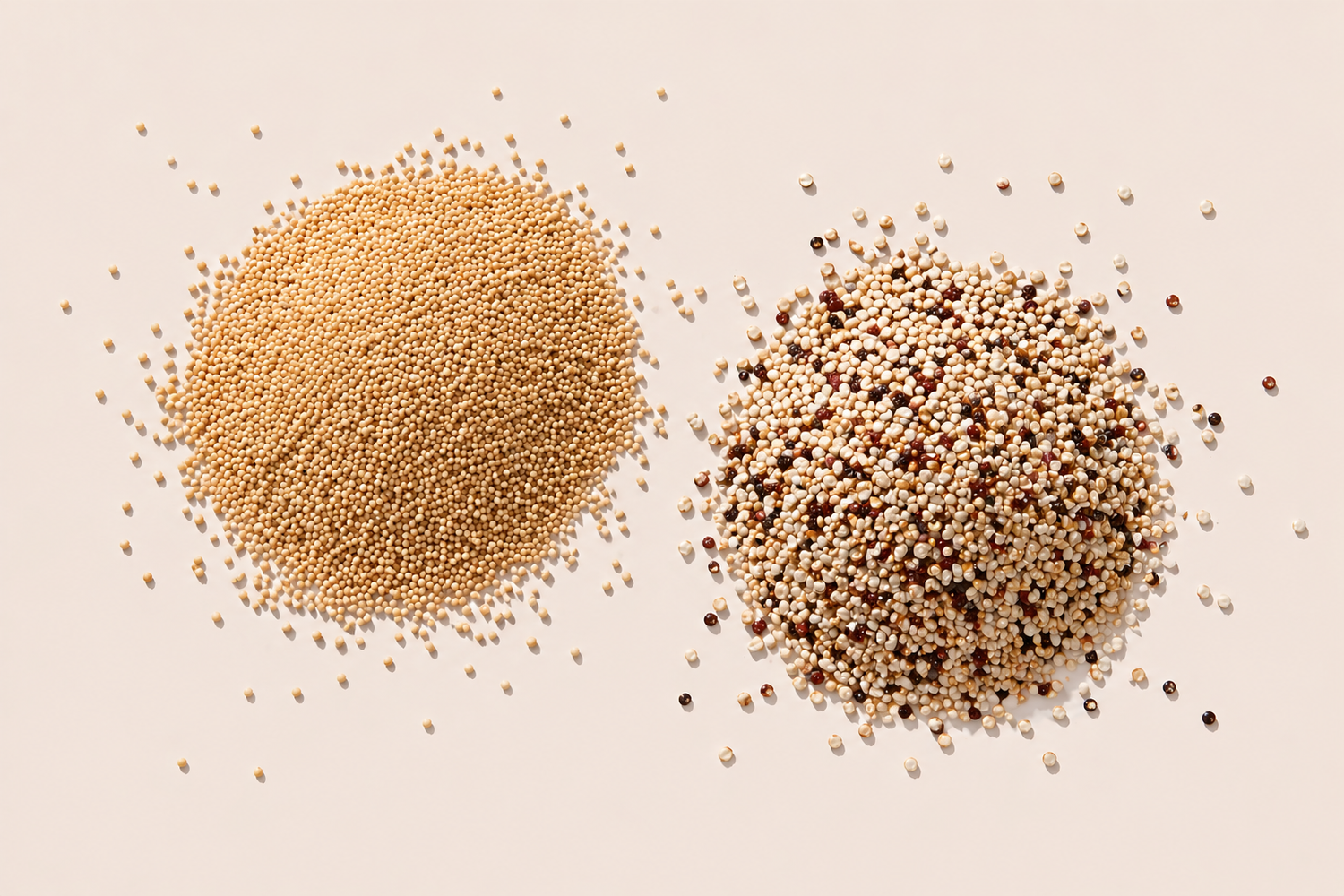
Key Takeaway
Amaranth and quinoa are excellent grains. When we talk about the amaranth vs quinoa debate, there's no need to crown one winner. Amaranth or rajgira brings complete protein, calcium, and iron at a fraction of the cost, whereas quinoa brings a gentler glycemic index and a stronger vitamin B profile. The most nutritionally sound approach would be to let both take turns on your plate.
In this Article
How to Use Amaranth in Your Diet?
Amaranth vs Quinoa: Which Is Better for You?
Introduction
Quinoa has long been known as the ultimate superfood. But amaranth, the humble grain Indian kitchens have long known as rajgira, has been quietly standing right beside it and that too for a fraction of the cost. So if you want to know all about the quinoa vs rajgira debate, read on!
What Is Amaranth
Amaranth is a pseudocereal, which is technically a seed rather than a grain. It has been part of traditional diets across America, Africa, and India for thousands of years. In Hindi, we call it Rajgira. It's used to make rajgira flour, laddoos, and porridge. So, to directly answer a common mix-up, are quinoa and rajgira the same? The answer is no. Rajgira is amaranth, and quinoa is a separate pseudocereal. So, what is amaranth good for nutritionally? Amaranth is a complete protein, which means that it contains all nine essential amino acids that the body cannot make on its own. This is very rare among plant foods and makes it especially valuable for vegetarians and vegans.
In addition to protein, amaranth's health benefits also include a strong calcium and iron profile. This is very useful for bone health and energy. Furthermore, Amaranth has a naturally lower sodium content than many other grains.
What Is Quinoa
Quinoa is another pseudocereal that is native to the Andes region of South America. It has earned its superfood reputation because it is a good source of protein, vitamin B, folate, zinc, copper, and potassium. Moreover, it has a notably lower glycemic index than amaranth, which may help support better blood sugar management.
Quinoa cooks up light and fluffy. It has a mild and slightly nutty flavor, and can be easily adapted into both savory and sweet dishes.
Comparing Amaranth vs Quinoa
Here's how amaranth and quinoa compare nutritionally.
|
Nutrient (per 100 g, cooked) |
Amaranth (Rajgira) |
Quinoa |
|
Calories |
~102 kcal |
~120 kcal |
|
Fat |
~1.58 g |
~1.92 g |
|
Carbohydrates |
~19 g |
~21.3 g |
|
Protein quality |
Complete protein; contains all 9 essential amino acids |
High-quality protein; amino acid profile is strong, though not fully complete like amaranth |
|
Calcium |
Higher |
Lower |
|
Iron |
Higher |
Lower |
|
Sodium |
Lower |
Higher |
|
Potassium |
Lower |
Higher |
|
Zinc |
Lower |
Higher |
|
Copper |
Lower |
Higher |
|
B-vitamins (B1, B2, B3) & Folate |
Lower |
Higher |
|
Glycemic Index (GI) |
~97 (High) |
~53 (Low) |
How to Use Amaranth in Your Diet?
Amaranth is very easy to cook. It can be cooked like rice or used in porridge and can fit into both savory and sweet meals. Here are two simple recipes that you can try.
Amaranth (Rajgira) Tabbouleh Salad
A protein-packed, refreshing salad, perfect for lunch or a light dinner.
- 1 cup amaranth seeds
- 1 cucumber, diced
- 1 tomato, diced
- 1/4 cup fresh parsley, chopped
- 1/4 cup fresh mint, chopped
- 2 tbsp olive oil, 1 tbsp lemon juice, salt and pepper to taste
Method:
- Rinse the amaranth seeds under cold water, then cook them in boiling water for about 10 minutes or until tender.
- Drain and cool.
- In a large bowl, combine the cooked amaranth with the cucumber, tomato, parsley, and mint.
- Whisk together the olive oil, lemon juice, salt, and pepper, pour over the salad, and toss well.
Amaranth Porridge With Coconut and Berries
A warm, nourishing breakfast that keeps you full and energised through the morning.
- 1/2 cup amaranth seeds
- 1 cup coconut milk
- 1/4 tsp cinnamon
- 1/4 cup mixed berries
- 1 tbsp shredded coconut, a handful of chopped nuts (optional)
Method
- Rinse the amaranth thoroughly, then cook in the coconut milk over medium heat, stirring occasionally, for about 15 minutes, until tender and most of the milk is absorbed.
- Stir in the cinnamon.
- Pour into a bowl and top with berries, shredded coconut, and chopped nuts.
If you want something yummy and ready-made, The Cinnamon Kitchen's Amaranth and Cacao Millet Cake is a great way to eat this grain without any of the effort. It is made with nutty amaranth and almond flour layered with an incredibly moist chocolate base, and topped with cashew cacao cream. This cake is sweetened with honey, and it has no maida, dairy, or preservatives.

Amaranth vs Quinoa: Which Is Better for You?
Neither grain is universally better. Amaranth (rajgira) versus quinoa boils down to your personal goal. If you're looking for protein and calcium, amaranth has the advantage. Gentler blood sugar impact favors quinoa. For most people, using both across the week is the smartest approach.
- For complete, plant-based protein, amaranth has the edge, thanks to its full amino acid profile.
- For bone health and iron, amaranth wins again, with meaningfully higher calcium and iron.
- For blood sugar management, quinoa is the better choice, given its low glycemic index versus amaranth's high one.
- For B vitamins, zinc, and potassium, quinoa comes out ahead.
- Amaranth is typically more affordable and requires significantly less water to grow than quinoa, much of which is imported into India.
FAQs
1. Is amaranth healthier than quinoa?
It depends on your goal. Amaranth is healthier for protein completeness, calcium, and iron, while quinoa is the better choice for blood sugar management.
2. Which has more protein, amaranth or quinoa?
Both are strong plant protein sources with broadly similar protein content, but amaranth has the advantage of being a complete protein with all nine essential amino acids.
3. Is quinoa easier to digest than amaranth?
Many people find quinoa slightly easier to digest since it's lighter and less dense. Having said that, both grains are generally well tolerated and easy to digest when cooked properly.
4. Can I eat amaranth daily?
Yes, in moderate portions as part of a varied diet, most people can eat amaranth daily. If you have diabetes or another condition that affects blood sugar, keep its high glycemic index in mind and check with a doctor or nutritionist about how it should fit your meals.
Popular Searches
Wedding Hampers for Guests | Diabetic Friendly Snacks | Badam Butter | Gluten Free Cookies | Jim Jam Biscuit
Popular Blogs
Biscuits for Diabetics | Which Dark Chocolate is Best for PCOS | Does Atta have Gluten | Is Granola Healthy
